Durable Outdoor Living Structures: How to Choose for Lasting Comfort
The most substantial-looking structure isn’t automatically the best choice for your yard. Durable outdoor living structures are selected by looking beyond appearance to how materials, construction, weather exposure, and ongoing care work together.
It’s understandable to expect a clear answer from a product description, yet words like “sturdy” or “all-weather” don’t always reveal the details that matter. A wood gazebo, a metal-roof gazebo, and an adjustable pergola each create a different kind of outdoor setting, and their materials and construction should be considered in relation to where and how you plan to use them.
This guide will help you assess the factors that influence durability and compare options against your climate, intended use, and maintenance preferences. You’ll learn what construction details to look for, why exposure can affect materials differently, and how regular care fits into the picture. With a clearer way to weigh those considerations, you can shape a comfortable, coordinated outdoor space with choices that suit your home and the conditions they’ll face.
Key Takeaways
- Durability depends on how materials, design, exposure, assembly, and care work together, not on appearance alone.
- Compare metal, wood, aluminum, and concrete composite by their characteristics and intended use rather than treating one material as universally superior.
- When evaluating durable outdoor living structures, check construction details such as joints, fasteners, finishes, panels, and assembly requirements.
- Choose a gazebo or adjustable pergola according to the kind of overhead coverage you want, then coordinate furnishings with the space’s primary purpose.
- Before choosing, review dimensions, site exposure, anchoring guidance, and care instructions to see whether a structure suits your outdoor setting.
What Makes Durable Outdoor Living Structures Worth Choosing?
A substantial appearance can suggest strength, but it doesn’t tell you how a structure is designed, assembled, or suited to its setting. Durability isn’t a look or a single material claim. It’s the way materials, design, exposure, assembly, and ongoing care work together in the space where you plan to use the structure.
Durable outdoor structures are products designed and assembled to serve their intended outdoor function under their expected conditions, with performance supported by appropriate care. That definition leaves room for meaningful differences: a structure intended to create shade has a different role from one chosen for overhead shelter, dining, or warmth. Start with the experience you want, then evaluate whether the product details support it.
Which outdoor structures create lasting function?
Gazebos and pergolas shape outdoor space overhead, but they don’t necessarily provide the same kind of coverage. A gazebo’s roof creates a defined covered area, while an adjustable pergola can change its overhead position to suit shade preferences. The specific design determines what coverage it offers, so review the product description rather than assuming all structures shelter equally.
Dining sets and seating support repeated everyday use: meals, conversation, and relaxed pauses outside. A fire table, by contrast, is a gathering feature, not a shelter structure. Think of it as one element in a comfortable setting, alongside appropriate seating and any overhead structure the space needs.
Why does durability matter beyond appearance?
Dependable construction helps an outdoor area remain comfortable and usable for its intended purpose, rather than becoming a source of avoidable repairs or replacement. Yet choosing a material category alone won’t tell the whole story. A structure’s exposure to sun, moisture, and other site conditions, as well as its assembly and maintenance, can affect how it performs over time.
That’s why product-specific details matter. Look for stated materials and finishes, examine how components connect, and follow the assembly and care instructions. Check anchoring guidance and any documented performance information against the conditions where the structure will stand. Don’t infer wind performance, weather resistance, or service life from appearance or from another product made of a similar material.
A well-planned outdoor setting also considers how its pieces work together. Landscape architecture offers useful context for thinking about outdoor spaces as coordinated environments, not isolated objects. Whether the priority is shade, dining, shelter, or warmth, matching each piece to its role helps create a space that feels considered as well as practical.
How Materials and Construction Affect Outdoor Structure Durability
Material names are a starting point, not a verdict. Metal, wood, aluminum, and concrete composite each bring different appearances and construction considerations; none is automatically the best choice for every setting. A structure’s material alone can’t determine its durability; design, connections, finish, assembly, exposure, and care all shape how it performs.
What should you know about metal, wood, and aluminum?
Consider how a material fits your preferred look and upkeep routine, then look for details about its components and finish. “Metal” can describe different materials or parts, and a metal roof doesn’t establish what the gazebo’s frame is made from. A wood structure’s species, protective treatment, and care guidance matter. Aluminum furniture is another category, but its listed material alone doesn’t confirm a particular coating or performance.
These distinctions are visible in the catalog’s categories: a hardtop gazebo with a metal roof, an enclosed wood gazebo, and an aluminum dining set. The concrete composite fire table represents a separate material category for a gathering feature, not an overhead structure. These examples identify product types, not guaranteed behavior. Verify product-specific claims about corrosion, fading, moisture response, or strength against the current listing before comparing options.
For a visual sense of the forms outdoor settings can take, browse HGTV’s variety of outdoor structures. Use inspiration to clarify the function you want, then turn to each product’s specifications for the details that affect your decision.
How do finishes, joints, and assembly influence longevity?
Construction details often hide in the fine print. Review how major parts connect and check whether the listing describes hardware, finish, panels, and assembly requirements. On a structure, look for clear guidance on how roof or screen components attach to the frame. On furniture, examine the connections between the frame and the parts that support seats or the tabletop.
- Connections: Check the stated joint design and how pieces are secured.
- Finish and components: Look for descriptions of coatings, panels, and included hardware; don’t assume protection that isn’t specified.
- Assembly and care: Follow the manufacturer’s instructions and review maintenance guidance for the exact product.
Correct assembly matters because it helps the product serve its intended use as designed. Don’t substitute assumptions for instructions, particularly for anchoring or care. To compare available categories while keeping these checks in mind, explore outdoor living products from Top Tier Patio Gear.
Compare Durable Outdoor Living Structures by Their Purpose
The right arrangement starts with how you want to spend time outside. A space for shaded meals may call for a different combination than an open-air lounge or a sheltered gathering spot. Compare durable outdoor living structures by function first, then confirm the dimensions and product specifications fit your setting.
| Structure or furnishing | Primary function | What to consider |
|---|---|---|
| Roofed gazebo | Creates a defined overhead-covered area | Review the roof and frame details, dimensions, assembly, and anchoring guidance. |
| Adjustable pergola | Offers a flexible overhead arrangement for shade | Check how the overhead components adjust and what coverage the listing describes. |
| Dining or lounge furniture | Supports meals, conversation, and relaxation | Measure the footprint and allow comfortable routes around chairs and tables. |
Gazebo or pergola: which suits the space and routine?
Choose a roofed gazebo if a defined covered area is central to your plans; consider an adjustable pergola if you value flexibility in overhead shade and an open-air feel. These aren’t interchangeable forms of coverage. Don’t assume a pergola provides the same shelter as a roofed gazebo, or infer a specific level of protection from a product name alone. Review the listing for construction, adjustment, and coverage details. For a closer look at a metal-roof option, read this metal gazebo guide. A wood gazebo raises different material questions; The Wood Database explains how wood species differ in natural resistance to decay. Explore its structure and style in the octagon wood gazebo guide.
How should furniture and focal features fit the structure?
Plan circulation before choosing a table or seating arrangement. Leave practical room to pull out chairs, move between the dining area and entry points, and gather without crowding. Match the furniture to how you host: a dining set serves meals, while lounge seating supports a more relaxed conversation area. Check product dimensions against the available footprint rather than assuming a set will fit beneath a structure.
A fire table can provide a distinct gathering focal point, but it doesn’t replace overhead shelter. Consider its placement in relation to seating and the structure, then review the product instructions for relevant use and clearance guidance. For more on this feature, see the propane fire table guide. A thoughtful combination makes each piece useful while preserving an easy flow through the space.
Use This Checklist to Evaluate Outdoor Structure Durability
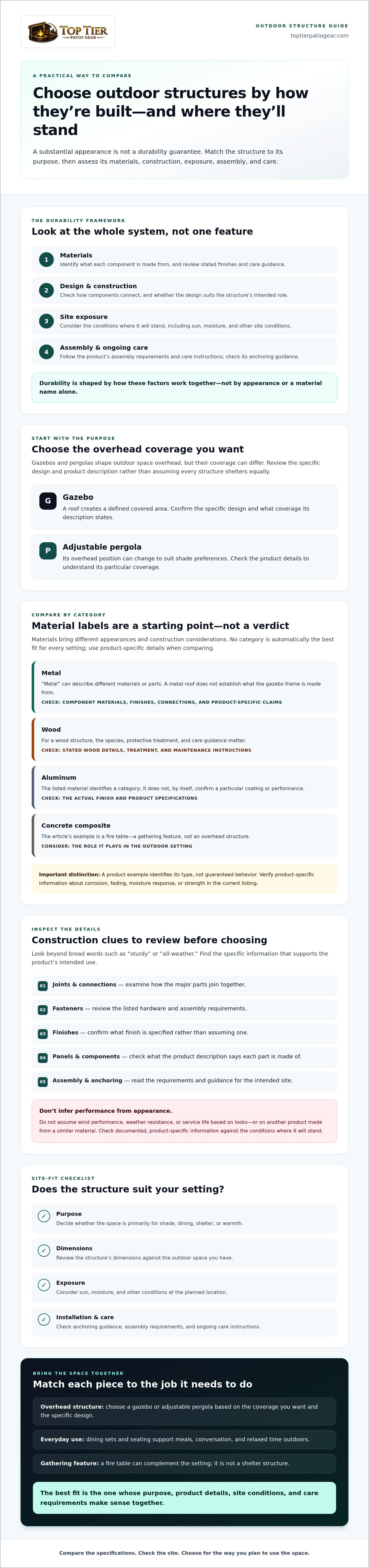
A product page can help you compare options, but the right choice also depends on the space where the structure will stand and the way you plan to use it. Use this checklist to assess durable outdoor living structures with attention to practical details, not broad labels alone.
A practical pre-purchase checklist
- Define the purpose. Decide whether you need shade, dining space, overhead shelter, or room for gathering. This clarifies which structure type and features to consider.
- Check dimensions. Compare the listed measurements with your intended placement, including the space needed for doors, screens, or moving components where applicable.
- Assess exposure. Consider the sun, precipitation, wind, and seasonal conditions at the site. Look for product-specific performance information rather than assuming a general label applies to your setting.
- Measure available space. Account for circulation around the structure and room for furniture, access points, and other planned features.
- Compare stated materials. Review descriptions of the frame, roof, panels, and finish. Don’t infer a coating or weather-related capability that the current listing doesn’t confirm.
- Review assembly requirements. Check what components are included, what tools or steps may be required, and whether the instructions are clear for the product.
- Read anchoring guidance. Follow the manufacturer’s stated instructions and confirm the guidance suits the planned placement. Don’t assume an anchoring method or wind performance.
- Understand care needs. Note cleaning, inspection, and storage instructions for the specific materials and components.
- Verify claims and requirements. Confirm performance claims in current product documentation, and check local safety and installation requirements that apply to your property.
Before choosing, confirm the structure’s purpose, measured fit, site exposure, stated materials, assembly and anchoring instructions, and care guidance. These checks help you compare products on information relevant to your plans, without relying on an unsupported rating or appearance alone.
Follow the manufacturer’s assembly instructions carefully. Top Tier Patio Gear doesn’t offer professional installation services, so if a project requires specialized installation or you’re unsure how to proceed, consult a qualified professional. For more options to assess against your checklist, explore outdoor living products.
Build a Cohesive, Durable Outdoor Living Space with the Right Pieces
A comfortable outdoor space doesn’t need every feature at once. Begin with the activity you want to make easier, then choose a structure and furnishings that support it. Shaded dining, relaxed seating, and a place to gather each call for a different arrangement. The goal is a space that feels welcoming while making practical sense for your site, routine, and care preferences.
How can you plan a space that feels considered and functional?
Start with one anchor purpose. If dining is the priority, plan where the table and chairs will sit before deciding whether a gazebo or pergola suits the area. For relaxed seating, consider how people will enter, move through, and settle into the space. Leave room to pull out chairs and walk around furnishings without narrowing the route between the structure and other parts of the yard.
Then coordinate the visual and practical details. Repeat a material or finish where it makes sense, but let dimensions, exposure, assembly, and care needs guide the final choices. A product that complements the setting still needs to fit it. Thoughtfully chosen durable outdoor living structures and furnishings can create a more unified space when each piece has a clear role.
What can you explore at Top Tier Patio Gear?
Top Tier Patio Gear’s confirmed categories offer several starting points: an adjustable pergola with screens, gazebos including wood and metal-roof options, an aluminum dining set, and a concrete composite propane fire table. Think of them as distinct pieces to compare, not as proof of performance. A gazebo or pergola can help define the overhead area; dining furniture supports meals, while the fire table can serve as a separate gathering focal point.
Before settling on a combination, compare current product details, including listed materials, dimensions, assembly requirements, and care instructions. Check that the pieces fit your intended layout and that their maintenance needs suit the way you’ll use the space. Informed choices connect material selection with site conditions and ongoing care.
Have a function in mind? Take a look at the options and assess how each one might fit your plans. Explore outdoor living products at your own pace.
Make Your Outdoor Space Ready for More
Choosing durable outdoor living structures is less about finding a single “best” material and more about making a thoughtful match. Let your intended use guide the layout, consider how your site’s conditions may affect your choices, and give product-specific details more weight than broad durability claims.
A well-composed outdoor area can bring structure and furnishings together without asking every piece to do the same job. Top Tier Patio Gear’s catalog includes metal-roof and wood gazebo options, along with an adjustable pergola and an aluminum dining set. Compare their current product details, dimensions, and care instructions as you consider what suits your space and routine.
With a clear purpose and careful product review, you can create a setting that feels comfortable, cohesive, and ready for everyday enjoyment. Explore outdoor living products and find inspiration for your next outdoor gathering.
Frequently Asked Questions
What makes an outdoor living structure durable?
Durability comes from how a structure’s materials, design, connections, assembly, exposure, and care work together. A sturdy appearance alone can’t confirm how it will perform in your yard. Review the frame and panel descriptions, joints, fasteners, finish, assembly instructions, anchoring guidance, and maintenance requirements. Then compare those details with the structure’s intended use and the conditions at its planned location.
Which material is best for durable outdoor structures?
No single material is best for every outdoor structure. Metal, wood, aluminum, and concrete composite serve different functions and come with different construction and care considerations. For wood, species and treatment can affect its outdoor suitability; for metal or aluminum, check the specific finish and components described. Choose based on the product’s documented details, intended use, site exposure, and the upkeep you’re prepared to follow.
Are metal gazebos durable in different weather conditions?
They may suit some outdoor settings, but a metal gazebo’s performance depends on its specific materials, construction, finish, assembly, and exposure. “Metal” or “hardtop” alone doesn’t confirm resistance to corrosion, wind, or precipitation. Review the current listing for product-specific claims, dimensions, assembly steps, and anchoring guidance. Consider the conditions at your site, and don’t assume one gazebo is appropriate for every climate or placement.
Is a pergola or gazebo better for long-term outdoor use?
The better fit depends on the experience you want, not a universal durability ranking. A roofed gazebo creates a defined covered area, while an adjustable pergola offers a different overhead arrangement and may suit those seeking flexible shade. Compare the construction and coverage details in each product listing, then consider your exposure, intended use, and care routine. A pergola shouldn’t be assumed to provide the same shelter as a roofed gazebo.
How can I protect an outdoor structure from weather and wear?
Follow the care and storage instructions supplied for the specific product and its materials. Regularly check the structure’s connections and finish as directed, and address cleaning or upkeep according to the manufacturer’s guidance. Consider how sun, precipitation, wind, and seasonal conditions affect its placement. Avoid applying treatments or using cleaning methods unless the instructions support them, since recommendations can differ across materials and finishes.
Do outdoor structures need anchoring?
Anchoring needs vary by structure, design, placement, and manufacturer instructions, so don’t assume every product uses the same method or requirements. Check the current product documentation for stated anchoring guidance and follow it during assembly. Also verify applicable safety and installation requirements for your property. If you’re uncertain about the site or how to carry out the stated instructions, consult a qualified professional.
Can I combine a gazebo, pergola, and outdoor furniture in one space?
Yes, if the available space and layout support each piece’s function. A gazebo or pergola can define an overhead area, while dining sets and lounge seating create places to eat or relax. Measure first and plan clear movement between structures, furniture, entrances, and any separate focal feature. Compare dimensions and care instructions for each item so the combination suits your routine and doesn’t overcrowd the space.