How to Clean Outdoor Cushions: A Complete Guide
Table of Contents
- What You'll Need Before Starting
- How to Clean Outdoor Cushions: Step-by-Step Process
- How to Deep Clean Outdoor Cushions
- How to Remove Mildew from Outdoor Cushions
- Can Outdoor Cushions Go in the Washing Machine?
- Best Cleaner for Outdoor Cushions
- Common Mistakes to Avoid
- Maintenance Tips to Keep Cushions Clean Longer
- Frequently Asked Questions
Last Updated: October 8, 2026
What You'll Need Before Starting
Before you start cleaning outdoor cushions, gather basic household supplies, most people already have these at home.
Here's what to collect:
- Soft-bristled brush or microfiber cloth
- Spray bottle for water
- Bucket for mixing solutions
Check the care label first: some covers are removable and washable, others need gentle hand cleaning.
Keeping supplies simple, basic household ingredients work as well as expensive products.
How to Clean Outdoor Cushions: Step-by-Step Process
Learning how to clean outdoor cushions is straightforward.
Step 1: Remove Loose Dirt and Debris
Start by removing loose dirt, dust, and debris, the easiest step, taking just a few minutes.
Take each cushion outside and tap it against a hard surface or brush away loose particles, especially at seams and crevices.
Brush away cobwebs, then rinse with a garden hose on low pressure to avoid fabric damage.
Step 2: Prepare Your Cushions and Covers
Check if your cushion covers are removable, many modern outdoor cushions have zippered or snap-on covers.
Remove removable covers to wash separately; clean attached covers in place.
Lay cushions flat on a clean surface like a patio table or deck, with room to access both sides.
Inspect inserts for mold or mildew and set them aside if they need separate attention.
Step 3: Select and Mix Your Cleaning Solution
Choose a cleaning solution based on what you have at home; most handle general dirt and stains.
Simple water solution: About one teaspoon of dishwashing liquid per gallon of warm water, for light cleaning.
Stronger solution: Warm water, dishwashing liquid, and a little white vinegar to cut stubborn dirt without harsh chemicals.
Baking soda paste: A thick baking soda-and-water paste applied directly to problem areas for spot cleaning.
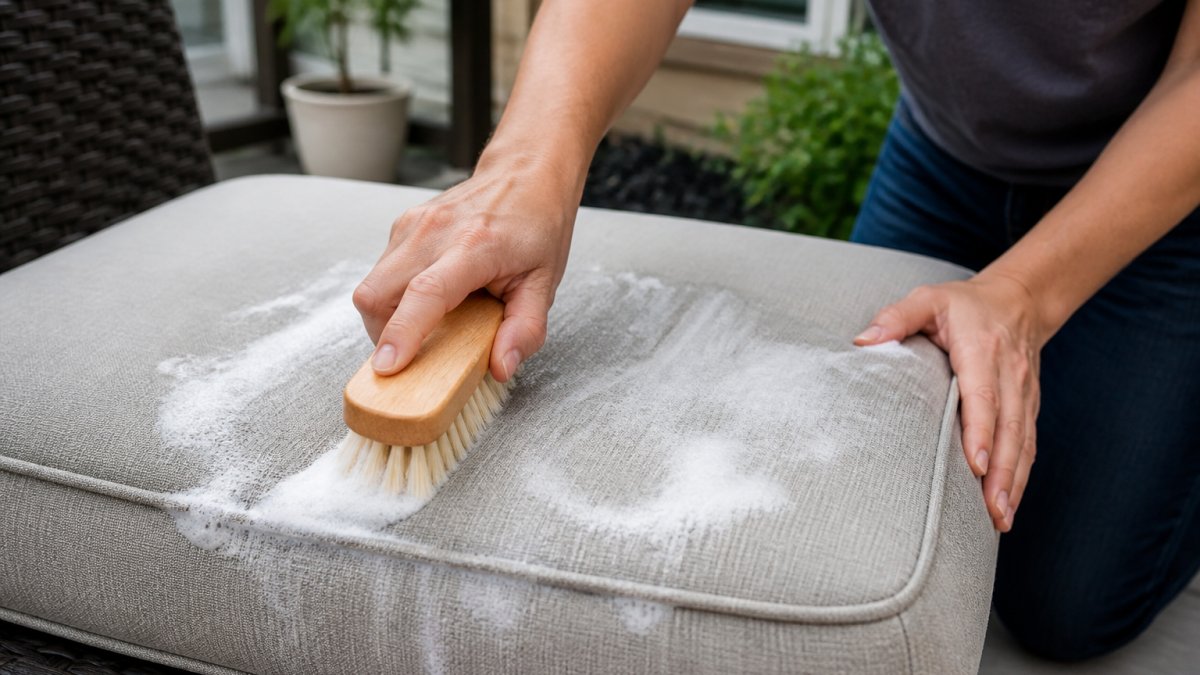
Step 4: Apply Cleaner and Scrub
Spray the solution evenly across the cushion, damp, not soaking wet.
Let it sit about 15 minutes to break down dirt and stains before scrubbing.
Scrub gently with a soft-bristled brush or microfiber cloth in circular motions, focusing on stains and heavily soiled areas.
Don't scrub hard, light pressure with a soft brush is more effective than force and avoids fabric damage.
Flip the cushion and repeat on the back side, which also collects dirt.
Step 5: Rinse Thoroughly and Dry
Rinse away all residue with a garden hose on low, until the water runs clear with no soap bubbles.
Squeeze out excess water gently, never wring or twist, which damages fabric and internal structure.
Lay cushions flat in direct sunlight to air-dry, turning them halfway so both sides dry evenly; sunlight naturally kills mildew and mold.
Drying takes 24 to 48 hours depending on humidity and temperature.
How to Deep Clean Outdoor Cushions
Deep cleaning handles embedded soil, set-in stains, and cushions neglected for a full season.
When to Deep Clean vs. Replace
Deep clean when:
- The cushion smells musty even after a normal wash.
- Mildew covers less than about 25% of the surface and the fabric is still structurally sound.
- Stains have set for more than a few days but the fabric has not discolored permanently.
Replace when:
- The foam core is saturated and will not dry after 48 hours in direct sun.
- Mildew has penetrated the fill or covers more than roughly a quarter of the cushion.
- The fabric is brittle, cracked, or shedding fibers, cleaning will accelerate the breakdown.
Stain-by-Stain Playbook
Treat stains immediately: fresh ones lift with mild soap, while set stains need targeted chemistry.
- Mildew (dark spots, musty smell): Spray a 1:1 white vinegar and water mix, let it sit 20 minutes, then scrub gently with a soft brush. For stubborn mildew on white or colorfast fabric, use a diluted oxygen bleach soak per package directions. Rinse thoroughly and dry in direct sun, UV helps stop regrowth.
- Bird droppings: Scrape off solids with a plastic scraper (never metal). Apply a mild dish soap solution, let it sit 10 minutes, then blot and rinse. Droppings are acidic and can etch coated fabric if left on.
- Tree sap: Harden the sap with an ice cube for a few minutes, then peel it off. For residue, dab with isopropyl alcohol on a cloth, test first on coated or laminated fabric, since alcohol can dull the finish.
Adapt the Method to the Cushion Construction
- Removable covers: Deep clean the cover separately. Most solution-dyed acrylic and polyester covers can be machine washed on a gentle cycle with cold water and a small amount of mild detergent. Zip all zippers closed and turn the cover inside out to protect the finish. Never use hot water, a heavy-duty cycle, or a dryer, heat shrinks fabric and degrades elastic.
- Attached covers over foam: Clean in place. Do not soak. Work in sections with a spray bottle and a soft brush, and use a wet/dry vacuum or clean towels to pull moisture out as you go.
- Foam inserts: Hand wash only, in a bathtub or large bin, with cool water and mild soap. Press, do not wring, to expel water. Rinse until the water runs clear. This is the step most guides skip, and it is the one that determines whether mildew comes back.
Drying the Core, Not Just the Cover
The cover can feel dry while the foam core still holds moisture.
- Stand the cushion on its edge, not flat, so air moves through both faces.
- Place in direct sun for at least 6 hours, then flip and repeat.
- Squeeze a corner of the foam every few hours. If you feel dampness, keep drying.
Deep-Clean Frequency
Most households need a deep clean once or twice per season, typically at the start of the season and again before storage. In humid climates or under heavy tree cover, add a third pass. Between deep cleans, weekly brushing and immediate spill cleanup prevent the buildup that makes deep cleaning necessary.
How to Remove Mildew from Outdoor Cushions
Mildew appears as dark spots on cushion fabric and thrives in damp, shaded areas.
To remove mildew, spray equal parts white vinegar and water on affected areas, let sit 20 minutes, then scrub gently.
Rinse thoroughly and dry completely in direct sun, your best defense against mildew returning.
If mildew returns often, move cushions to a sunnier spot, improve air circulation, and store them indoors off-season.
Can Outdoor Cushions Go in the Washing Machine?
Only cushions with completely removable covers should go in a washing machine, check the care label first for manufacturer instructions.
Machine-washable covers need cold water and a gentle cycle; hot water or heavy-duty settings damage fabric and fade colors.
Never machine-wash inserts, the foam or filling breaks down and clumps. Hand wash them instead.
Air-dry covers completely before replacing them; a dryer's heat shrinks fabric and damages elastic.
Best Cleaner for Outdoor Cushions
There is no single "best" cleaner for outdoor cushions, the right choice depends on the fabric, fill, and stain. Use the fabric-first framework below.
Step 1: Read the Care Label Before You Choose a Cleaner
Find the fabric name and care code on the sewn-in tag or manufacturer's spec sheet. Common codes are:
- W, water-based cleaners only.
- S, solvent-based cleaners only (never water alone).
- WS, water- or solvent-based cleaners are safe.
If the tag is missing, test any cleaner on a hidden area, zipper flap, underside seam, or back panel, and wait 15 minutes, watching for color lift, ring marks, or a stiffened feel.
Step 2: Match the Cleaner to the Fabric
- Solution-dyed acrylic (common on high-end patio sets): Mild dish soap and warm water is the default. Avoid bleach on colored acrylic, it can dull pigment even when the fiber itself resists fading. For mildew, a diluted oxygen bleach (sodium percarbonate) is gentler than chlorine bleach on colored fabric.
- Polyester and polyester blends: Tolerates mild soap, diluted white vinegar, and oxygen bleach. Avoid oil-based or solvent cleaners, which can leave a residue that attracts dirt.
- Olefin (polypropylene): Highly stain-resistant and moisture-resistant, but sensitive to heat. Use cool water and mild soap; never use hot water or a heated dryer, which can deform the fiber.
Step 3: Dilution Ratios That Actually Work
Eyeballing "a splash" leaves cushions over-soaped and sticky. Use measured ratios:
- Everyday wash: 1 teaspoon of mild liquid dish soap per 1 gallon of warm water.
- Mildew spray: 1 part white vinegar to 1 part water (a 1:1 ratio). For heavier mildew, up to 1 part vinegar to 3 parts water is a common stronger mix.
- Oxygen bleach soak (for white or colorfast covers): Follow the package ratio, typically 1 scoop per gallon of warm water. Never substitute chlorine bleach unless the care label explicitly permits it.
Step 4: Safe Mixing Rules
- Never mix chlorine bleach with vinegar, ammonia, or any acid-based cleaner. The reaction releases chlorine gas, which is toxic in enclosed spaces like a garage or covered patio.
- Never mix bleach with hydrogen peroxide, the combination is corrosive and can damage fabric and skin.
- Never mix vinegar and hydrogen peroxide in the same bottle. Combined in one container they form peracetic acid, which is a stronger irritant than either alone. Use them in separate steps, with a rinse in between.
Step 5: When to Skip Household Ingredients
For set-in grease, tree sap, or sunscreen on coated or laminated fabrics, a fabric-safe commercial outdoor-fabric cleaner can be effective. Choose products labeled for outdoor or marine fabric and follow the label dilution.
Common Mistakes to Avoid
These common mistakes damage cushions.
Using too much water: Oversaturating cushions leads to mold and mildew.
Skipping the rinse: Cleaner residue left on fabric attracts dirt quickly.
Not drying completely: Putting damp cushions back on furniture traps moisture underneath.
Scrubbing too hard: Aggressive scrubbing damages fabric fibers.
Ignoring care labels: Different fabrics need different treatment.
Storing damp cushions: Never put cushions away while they're still moist.
Maintenance Tips to Keep Cushions Clean Longer
Regular maintenance prevents heavy cleaning sessions and extends cushion life.
Brush off dust and debris weekly.
Use covers or storage boxes off-season; most regions benefit from indoor winter storage.
Wipe up spills immediately; fresh stains clean far easier than dried ones, so keep a damp cloth nearby.
Rotate cushions regularly for even wear and drying.
Allow air circulation, don't stack tightly or cover completely, since good airflow prevents moisture buildup.
Consider a protective spray for outdoor fabric, reapplied per directions, usually once or twice per season.
Keeping your outdoor cushions clean doesn't require expensive products or professional help, simple household ingredients and basic techniques can deliver excellent results.
Frequently Asked Questions
Can I use a washing machine to clean outdoor cushions?
Most outdoor cushions should not go in the washing machine, especially those with foam inserts or delicate outdoor fabrics. Removable cushion covers may be machine-washable if the care label permits, but always check first. Machine washing can damage the foam, fade colors, and compromise water-resistant treatments. Hand cleaning with a soft brush and mild solution is safer and more effective for most outdoor cushions.
What's the best cleaner for outdoor cushions?
A mixture of warm water with a small amount of dishwashing liquid works well for routine cleaning. For tougher stains or mildew, try a solution of equal parts white vinegar and water, or mix baking soda with water to form a paste. Always test any cleaner on a hidden area first. Avoid bleach and harsh chemicals, which can damage fabric and harm plants nearby. Eco-friendly options like vinegar or baking soda can be effective.
How do I remove mildew from outdoor cushions without bleach?
Mix equal parts white vinegar and water in a spray bottle and apply to mildewed areas. Let it sit for 15 minutes, then scrub gently with a soft-bristled brush. Alternatively, sprinkle baking soda directly on the affected area, let it sit for several hours, then brush it away. After treatment, rinse thoroughly and allow cushions to air-dry completely in sunlight, which naturally inhibits mildew growth. Repeat if necessary.
How often should I clean my outdoor cushions?
Clean outdoor cushions at least once per season, or monthly during heavy use. Spot-clean stains as they appear. If your cushions are exposed to dust, pollen, or moisture regularly, clean them more frequently. After winter storage, always clean cushions before using them. Regular maintenance prevents dirt buildup, mildew, and staining, keeping your patio furniture looking fresh and extending the life of the cushions.