How to Heat Your Outdoor Patio: A Practical Guide
The most powerful heater isn’t always the one that makes your patio feel warmest. Keeping an outdoor patio heated comfortably depends on where the warmth reaches, how exposed the seating area is, and how you plan to use the space. A sheltered nook and an open patio have different needs, so choosing by output alone can leave guests still reaching for another layer.
It makes sense to want dependable warmth without compromising comfort or overlooking safe use. The right setup can make outdoor dinners linger longer and quiet evenings feel more inviting, but the heater should suit the layout rather than compete with it.
This practical guide compares propane and electric heaters with fire tables, considers how each may fit an open or sheltered patio, and explains how to plan placement around seating and comfort goals. You’ll also learn what to check in product specifications, operating instructions, and safety guidance before deciding. Matching heat delivery to the space helps create an outdoor setting that feels considered, comfortable, and ready to enjoy.
Key Takeaways
- To keep an outdoor patio heated comfortably, focus on warming the seating area rather than trying to heat the open air.
- Compare propane, electric heaters, and fire tables by energy source, setup needs, intended use, and the atmosphere you want to create.
- Assess how exposed or sheltered your patio is before choosing a heating option, as the layout affects where warmth will be useful.
- Plan around seating and clear circulation, then check the product instructions for operating requirements and safe placement.
- Match your choice to the space and its energy access, whether you’re considering a standing heater, portable electric heater, or propane fire table.
What Does It Take to Keep an Outdoor Patio Heated and Comfortable?
The aim isn’t to heat every pocket of open air. It’s to make the time you spend outside more comfortable, whether that means lingering over dinner or gathering for conversation after sunset. Keeping an outdoor patio heated starts with identifying the area people will actually use, then choosing warmth that suits that space.
Outdoor patio heating is directed or radiant warmth selected for a particular use area. Rather than expecting a heater to warm all the surrounding air, consider where people sit and how exposed that spot is. The Patio heater overview offers background on common heater types and how they work. Your own layout helps clarify what may fit.
Why an outdoor patio can feel cold even with a heater
Air temperature is only part of the comfort picture. Radiant warmth reaches people and objects in its effective direction, so someone seated in that area may feel warmer than someone beyond it. A breeze can move warmed air away, while an exposed seat may feel less comfortable than a sheltered one. Before choosing equipment, note where you tend to sit and when you expect to use the patio.
Set a realistic comfort goal before choosing equipment
Start with the gathering. Are you planning seated dining around one table, relaxed conversation in a compact seating group, or a broader area where people move between spots? Each calls for a different view of the occupied space. Personal comfort in a defined seating area is a more practical goal than expecting one heater to warm an entire open patio.
Effective patio heating means matching heat delivery to the area people occupy. That keeps the decision grounded in how the patio is used, not just a heater’s output rating.
Picture a dining table beside a sheltered wall, then compare it with chairs arranged in an open, breezy part of the yard. The same heating approach may not feel equally comfortable in both settings. Shelter, wind exposure, the direction people face, and the spacing of seats all influence where warmth is useful. Consider the layout at the times you plan to gather, too: evening meals and occasional conversation may call for different comfort priorities.
Once you’ve defined the goal, compare options against the occupied area, its exposure, and whether warmth should serve a focused seating group or a more flexible gathering spot. Output matters, but it can’t make up for a mismatch between heat direction and where people sit. A thoughtful plan can make the patio feel more inviting without promising warmth everywhere.
How Outdoor Patio Heating Works: Radiant Warmth, Propane, and Electricity
Outdoor heaters don’t all warm a space in the same way. Many patio heaters use radiant heat: rather than first warming all the surrounding air, they send warmth toward people and nearby objects. Think of the difference between trying to warm an open patio like an enclosed room and directing heat toward the place where guests are sitting.
A heater’s rated output is a product specification, not a guarantee that every seat across a patio will feel comfortable. Results depend on the heater’s direction and placement, the seating layout, exposure, and the product’s stated coverage. Neither propane nor electricity is automatically the better choice. Match the energy source and equipment requirements to the patio, then confirm performance details in the product listing and manufacturer instructions.
How propane patio heaters provide outdoor warmth
A standing propane heater uses fuel to produce heat for an outdoor seating area. Its portability may offer flexibility in where warmth is directed, but it also means planning for fuel, stable placement, ventilation, and required clearances. Follow the manufacturer’s instructions for setup and operation, and use the heater only in the setting it was designed for. CPSC guidance on critical safety warnings is a useful reminder to take portable-heater risks seriously and follow product-specific safety directions.
The catalog includes a 46000 Btus Aluminum Propane Standing Patio Heater. Treat that figure as a specification for this listed heater, not a universal benchmark or a promise of how a particular patio will feel. Check the product details for operating requirements, coverage information, and clearances before deciding where it belongs.
When an electric patio heater may suit the setting
An electric heater needs a suitable power source and an outdoor-appropriate setup. It may be worth considering where access to power and the intended seating arrangement make it practical. Before choosing a specific unit, verify its voltage and frequency, weather suitability, and relevant listing details. The catalog’s portable electric outdoor patio space heater is described as 50 Hz, so confirm its electrical compatibility for your intended use rather than assuming it will work with a particular supply.
Keep the comparison grounded in your own space: propane involves fuel and product-specific setup, while electric heating depends on compatible power access. Review the manufacturer’s directions for either type, including safe placement and operation. To compare the available categories with your patio plans in mind, explore outdoor heating equipment.
Propane Heater, Electric Heater, or Fire Table: Which Fits Your Patio?
The right choice depends on what warmth should do for your gathering and how the patio can support the equipment. Compare energy source, intended use, setup needs, and atmosphere rather than treating output as the only deciding factor.
| Option | Energy source | Intended use | Setup needs | Atmosphere |
|---|---|---|---|---|
| Standing patio heater | Propane | Directing warmth toward an outdoor seating area | Fuel, stable placement, and adherence to product clearances and instructions | Functional, with heat as the focus |
| Portable patio heater | Electricity | Heating a seating area where a compatible power source is available | Suitable outdoor setup and verified electrical compatibility | Low-key, with no open flame |
| Propane fire table | Propane | Creating a focal point for seated gatherings | Fuel, suitable placement, and manufacturer-directed clearances | Flame ambience and a social centerpiece |
Choose a patio heater for the warmth you need
Consider whether you have practical access to compatible power, whether you want flexibility in where the heater is placed, and where people will sit. A propane standing heater and an electric heater are different options, not universal substitutes. In the catalog, the 46000 Btus Aluminum Propane Standing Patio Heater and the 50 Hz Portable Electric Outdoor Patio Space Heater represent those two categories. Check each listing for specifications and operating requirements, then follow the manufacturer’s guidance. A heater’s output alone can’t promise comfort across the patio, particularly in open, breezy conditions.
For a closer look at the trade-offs, read this propane and electric patio heater comparison. If you want your outdoor patio heated around a particular seating area, let that layout and your available energy source guide the decision.
Choose a fire table for gathering and atmosphere
A fire table can give a seating arrangement a natural center, bringing guests together around visible flame and creating a distinct mood. Its role differs from a standing heater: it’s a social focal point, not a promise of the same heat distribution. Check product specifications and instructions before counting on it to provide warmth for particular seats. The catalog includes the Matteau Low 60 In. L X 12 In. H Outdoor Rectangular Concrete Composite Propane Fire Table. For more on this category, explore the propane fire table guide.
How to Plan a Heated Patio Around Seating, Shelter, and Safe Use
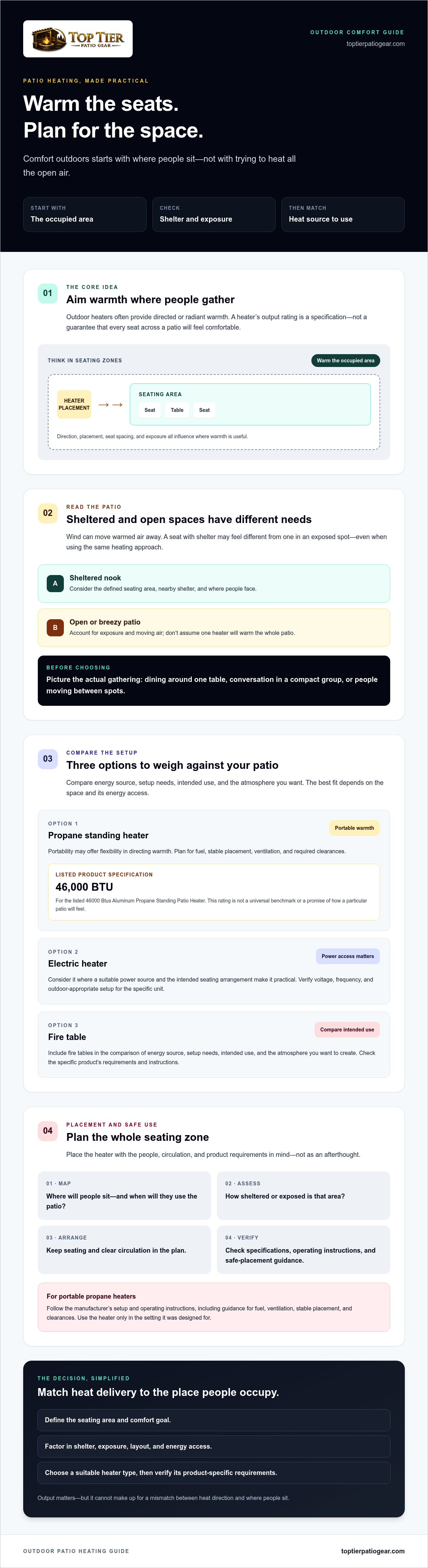
A considered layout helps warmth reach the people who need it while keeping the patio comfortable to move through. Before deciding where a heater belongs, work through this sequence:
- Define the use area: Identify the seats or gathering spot you want to make more comfortable.
- Note exposure: Consider whether the patio is open, partially sheltered, or covered, and how moving air affects the area.
- Check access: Confirm the practical availability of the fuel or compatible power source the selected equipment requires.
- Review instructions: Check the product manual for placement, clearances, operation, and care requirements.
Map the seating area and the patio’s exposure
Start with where people naturally sit, whether around a dining table or in a conversation area. Then consider how shelter and air movement may influence comfort. An open patio can feel different from a covered space, and a breezy spot may not feel as comfortable as a more protected seating area. These details help you assess the setting without assuming a heater will warm the entire patio.
Keep the whole layout in view. Arrange seating so guests can gather naturally, and preserve clear paths between chairs, doors, and other frequently used areas. Position the heater according to the model’s instructions while allowing people to move around without squeezing past equipment or disrupting the arrangement.
Use outdoor heating equipment according to its instructions
Read the manual for the specific model before use. It should guide you on fuel or electrical requirements, clearances from surrounding materials, operation, and any shutdown or storage steps. Set the heater on a stable surface as directed, and confirm that it’s suitable for the weather and location where you plan to use it.
Use outdoor equipment only in the setting its manufacturer specifies. Don’t use an outdoor heater in an enclosed space unless the manufacturer explicitly permits that use. Product requirements vary, so don’t rely on a general placement distance or advice for a different model. Check that the power source or fuel setup is appropriate, keep circulation paths clear, and follow all stated safety directions.
A well-planned outdoor patio heated for comfort is also arranged for safe, practical use. Let the occupied area guide your layout, then let the product manual determine the equipment’s permitted setup and operation. Explore patio heating equipment options as you compare suitable choices for your space.
Create a More Inviting Heated Patio with the Right Outdoor Gear
A considered choice brings together the space you want to warm, the energy source you can use, the patio’s exposure, and the atmosphere you want to create. The goal is an outdoor patio heated for the people using it, with equipment suited to the setting rather than selected by output alone.
A standing propane heater, a portable electric heater, and a propane fire table serve different purposes. A standing heater may suit a planned seating area, subject to its specifications and placement requirements. An electric option depends on compatible power access and outdoor suitability. A fire table can create a distinctive gathering point, but don’t assume it distributes warmth like a standing heater without product information to support that expectation.
Pair heating with the way you host
Think about how guests use the patio. For a regular seating arrangement, compare the heater’s listed details with the actual location of the chairs and table. For a more social focal point, the Matteau Low 60 In. L X 12 In. H Outdoor Rectangular Concrete Composite Propane Fire Table offers a flame-centered feature for outdoor gatherings. Treat ambience and heat as separate considerations, and review its specifications before deciding what warmth it can provide.
Seating and shelter also shape the experience. A clear arrangement can make it easier for guests to gather and move through the space, while a sheltered setting may feel different from an exposed one. Consider furnishings or a patio structure as part of the overall design, not as a bundled heating solution.
What to check before selecting a product
Before choosing, compare the product details with your patio and intended use. Check:
- Dimensions: Make sure the equipment suits the available space and planned layout.
- Fuel or power: Confirm propane requirements or electrical compatibility for the model.
- Outdoor suitability: Review the manufacturer’s information for the conditions where it will be used.
- Safe operation: Follow the stated placement clearances, operating directions, and shutdown or storage guidance.
Specifications matter more than assumptions. Confirm the details in each listing and the manufacturer’s instructions, especially for heating coverage and operating requirements. Then compare the propane standing heater, portable electric heater, and fire table according to the role each could play in your outdoor space.
Once you know what fits your layout, power or fuel access, and hosting style, explore outdoor heating and patio gear and review the relevant product details before making your decision.
Make Your Patio Ready for More Memorable Evenings
To keep an outdoor patio heated comfortably, focus on the area people use, the shelter and exposure around it, and the kind of gathering you have in mind. Directed warmth can support a well-planned seating area, but the right setup depends on more than a heater’s output rating. Check product specifications and manufacturer instructions before choosing or using any equipment.
Top Tier Patio Gear’s catalog includes propane and electric outdoor heating categories, along with a propane fire table for gathering spaces. A standing heater and an electric option have different setup needs, while a fire table can bring flame ambience to the setting. Let your layout, available fuel or power, and preferred atmosphere guide the choice.
Ready to consider options for your space? Explore refined outdoor heating options and review the relevant product details as you plan. With a thoughtful match between comfort goals and equipment, your patio can become a more inviting place to gather and unwind.
Frequently Asked Questions
Is a patio heater enough to keep an open outdoor patio warm?
A patio heater can make a defined seating area more comfortable, but it can’t guarantee warmth across an entire open patio. To keep an outdoor patio heated for a gathering, consider exposure, moving air, shelter, heater design, and placement. Set a realistic goal around the people and area you want to warm, then compare it with the product’s stated capabilities and instructions. Comfort can vary across the same patio.
Can you use a propane patio heater under a covered patio?
It depends on the heater and the exact conditions of use. Check the manufacturer’s instructions for permitted locations, overhead and side clearances, ventilation, and fuel requirements. Don’t assume a covered patio is suitable just because it’s outdoors. If the instructions don’t clearly address your setup, choose a different arrangement or seek qualified guidance before operating the heater there.
Which is better for heating an outdoor patio, propane or electric?
Neither option is best for every patio. Propane and electric heaters have different fuel or power requirements, placement options, and operating considerations. First consider whether propane or a suitable power source is practical for your space. Then weigh the patio’s exposure, seating layout, and intended use. Compare verified product specifications, including operating requirements, and follow the manufacturer’s safety instructions before making your choice.
How do you choose the right size patio heater?
Start with the area people will occupy, the patio’s exposure, and the product’s stated output and coverage guidance. Don’t rely on a single output figure or assume it guarantees warmth across a particular distance. Compare manufacturer specifications for each model, then consider whether you want focused warmth for a defined seating area or comfort for a wider gathering space. Placement and surrounding conditions also affect the experience.
Can a fire table heat a patio like a patio heater?
A fire table can add flame ambience and warmth near a gathering point, but it shouldn’t automatically be treated as equivalent to a patio heater. Heat direction and reach depend on the product and setting. Check its specifications and use instructions before relying on it for comfort. If you need warmth directed toward a particular seating area, compare a dedicated heater’s stated function with your needs.
Is it safe to use an outdoor patio heater in an enclosed space?
Don’t use an outdoor heater in an enclosed space unless the manufacturer explicitly permits that specific use. Follow the instructions for ventilation, clearances, fuel or electrical connections, stability, and operation. A covered patio isn’t automatically equivalent to an indoor room or a fully open area. Verify the model’s permitted setting before use, and choose another arrangement if the instructions don’t clearly cover your space.
What should I consider before buying an outdoor patio heater?
Consider the patio’s exposure, the seating area you want to warm, available fuel or electrical supply, and the heater’s verified specifications. Check outdoor suitability, stability, clearances, and operating instructions before deciding. Also think about whether you need focused warmth, flexibility in placement, or a social focal point. These practical criteria help you compare options more thoughtfully than appearance or output alone.