Modern Outdoor Adjustable Pergola Buying Guide: Curating Your Dynamic Sanctuary (2026)
A traditional open-beam trellis often fails at the exact moment you need it most, abandoning your gathering to blistering heat or sudden rain. Choosing a modern outdoor adjustable pergola transforms a static patio into a responsive, microclimate-controlled sanctuary. With adaptable roof engineering, you gain the freedom to shift effortlessly between radiant sunshine, cooling filtered shade, and watertight shelter with a simple turn.
If you're tired of flimsy canopies that rattle in high winds, or feel overwhelmed by manual versus motorized mechanics and foundation prep, your hesitation is completely natural. Curating an enduring outdoor living space shouldn't require hiring costly custom builders or gambling on lightweight materials. This guide equips you with the structural benchmarks, louver mechanics, and sizing strategies necessary to choose an architectural centerpiece built for all seasons. Ahead, explore how heavy-duty aluminum construction, concealed drainage, and perimeter screens seamlessly integrate with your favorite dining sets and fire features.
Key Takeaways
- Discover how a modern outdoor adjustable pergola moves beyond static shade, providing precision control over sunlight, ventilation, and watertight shelter.
- Evaluate critical durability benchmarks, including powder-coated aluminum frames, internal gutter channels, and reinforced louvers engineered to withstand shifting weather.
- Master foundation planning and structural anchoring techniques to ensure complete patio stability without relying on expensive custom contractors.
- Harness natural thermal convection and perimeter screens to lower ambient temperatures, soften direct sun exposure, and preserve evening comfort.
- Explore how all-in-one designs like the Alora pergola effortlessly unify your outdoor space alongside premium fire tables and dining collections.
What Defines a Modern Outdoor Adjustable Pergola?
A modern outdoor adjustable pergola is an engineered patio canopy featuring an operable, louvered roof system. Unlike static overhead trellises that merely filter midday rays, these dynamic systems give you immediate command over solar exposure, natural airflow, and overhead precipitation. Historically rooted in traditional pergola architecture that relied on open timber rafters and climbing vines, today's structures replace high-maintenance wood with architectural-grade aluminum alloys. The result is a resilient outdoor living space that responds effortlessly to shifting weather patterns.
The Evolution of Patio Shade: Static Versus Dynamic Roofs
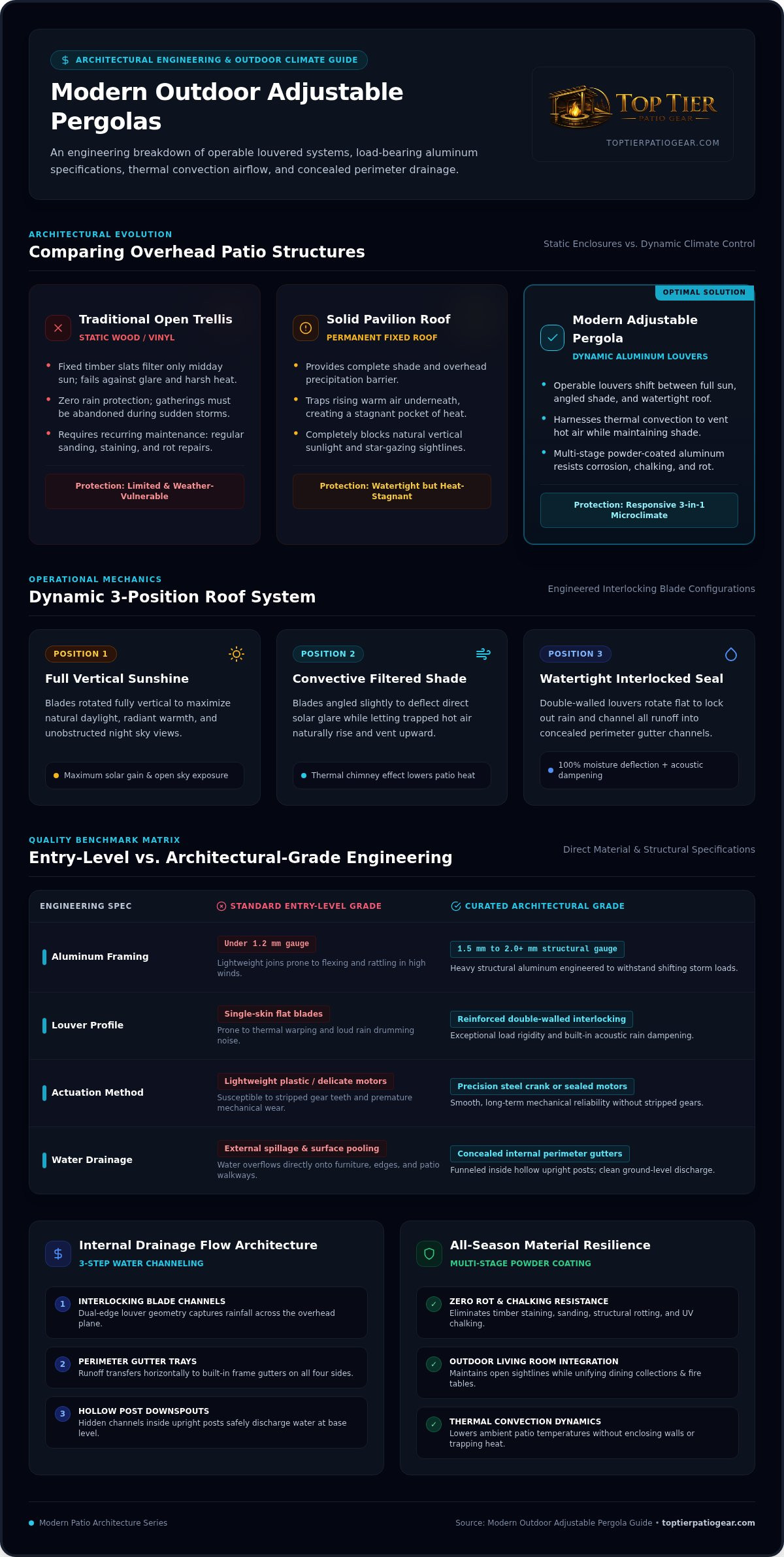
Traditional cedar, pine, and vinyl pergolas rely on fixed overhead slats. While visually charming, they offer minimal protection against harsh afternoon glare and completely surrender when sudden rain showers arrive. Solid pavilion roofs solve the moisture issue, but they frequently trap rising warm air underneath, turning your patio into a stagnant pocket of heat.
Dynamic louvered roofs eliminate this compromise entirely. By utilizing interlocking aluminum blades that pivot smoothly between open and shut configurations, they fulfill two vital roles:
- On-demand climate management: Angling the blades slightly encourages rising heat to escape through natural convection while casting soothing, filtered shade over your living area.
- Watertight overhead protection: Rotating the louvers fully flat forms an interlocking barrier that locks out driving rain, channeling moisture safely away through integrated drainage channels.
Core Architectural Advantages for Contemporary Living
Installing a modern outdoor adjustable pergola introduces sleek, purposeful elegance to any backyard layout. With crisp geometric profiles and minimalist posts, engineered aluminum frames complement modern residential architecture just as effortlessly as transitional exteriors. Multi-stage powder-coated finishes actively resist corrosion, chalking, and UV degradation, completely eliminating the recurring staining, sanding, and structural rot associated with untreated timber.
Framing your deck or stone terrace with an adjustable louvered canopy establishes the distinct ambiance of an outdoor room without the enclosing claustrophobia of solid walls. You retain open sightlines across your landscaping while extending your home's usable living space into a sheltered, year-round retreat.
Key Engineering Features: Evaluating Pergola Quality and Durability
Investing in a modern outdoor adjustable pergola requires looking beneath surface aesthetics to evaluate mechanical resilience. Selecting heavy-duty extrusions and weather-sealed joints ensures your dynamic shelter endures seasonal storms without rattling, flexing, or premature corrosion.
| Engineering Spec | Standard Entry-Level Grade | Curated Architectural Grade |
|---|---|---|
| Aluminum Framing | Thin gauge (under 1.2 mm), lightweight joins | Heavy structural aluminum (1.5 mm to 2.0+ mm) |
| Louver Profile | Single-skin flat blades prone to warping | Reinforced double-walled interlocking blades |
| Actuation Method | Lightweight plastic gears or delicate motors | Precision steel crank gearboxes or sealed motors |
| Water Drainage | External edge spillage or surface pooling | Concealed internal gutters down hollow posts |
Louver Architecture: Double-Walled Blades and Hidden Gutters
Superior weather defense begins at the roofline. Reinforced double-walled blades provide exceptional rigidity under sustained loads while offering acoustic dampening that softens the loud drumming of driving rain. As highlighted in architectural research on sun control and shading devices, dual-edge louver geometry deflects radiant heat during midday while funneling runoff into built-in perimeter trays. Precipitation travels cleanly through hidden corner downspouts inside hollow uprights, discharging at ground level to keep your lounge dry.
Drive Mechanisms: Precision Manual Cranks Versus Motorized Kits
Mechanical design directly impacts long-term reliability. Motorized canopies deliver remote control convenience and automated sensor actuation, yet smooth manual hand cranks remain the premier choice for zero-maintenance performance. A manual gearbox eliminates electrical failures, complex wiring, and motor burnouts, allowing you to reposition louvers effortlessly from zero to 90 degrees. Discerning homeowners seeking uninterrupted operation can explore enduring outdoor systems through Top Tier Patio Gear to secure tested engineering built for sustained 50 to 73 mph wind resistance.
Integrated Perimeter Screening and Boundary Control
True comfort demands horizontal defense alongside overhead shelter. Engineered side cassette tracks hold retractable mesh taut against crosswinds, keeping screens from blowing out of their channels. Calibrated micro-mesh strikes an ideal balance, blocking biting insects and evening glare while preserving natural airflow and outside sightlines.
Sizing, Site Selection, and Foundation Planning: A Step-by-Step Blueprint
Careful groundwork turns an ambitious patio upgrade into an enduring architectural statement. Before anchoring a modern outdoor adjustable pergola, you must evaluate the surrounding terrain, spatial layout, and environmental exposure. A structured approach ensures your shade canopy balances visual harmony with structural resilience.
Step 1 & 2: Measuring the Footprint and Calculating Sun Paths
Begin by mapping the daily solar transit across your property. Orienting louver axes to intersect the prevailing afternoon sun maximizes shade cast across prime living zones. According to EPA heat mitigation and shading data, effective overhead shading can lower surface temperatures by 20 to 45 degrees, significantly preserving the comfort of stone and composite decking.
Next, define the internal proportions needed for living, dining, and effortless movement:
- Dining and conversational scale: Allocate at least 10x16 to 12x20 feet of clearance if you plan to shelter an eight-seat dining group or a wide sectional sofa.
- Traffic corridors: Preserve a minimum of 36 inches of unobstructed walkway between structural support uprights and exterior steps, garden boundaries, or exterior walls.
Step 3: Substrate Anchoring and Structural Base Preparation
Secure anchoring provides the bedrock for wind resistance. A dead load baseline of 5 to 8 pounds per square foot exerts significant uplift and lateral force across anchor points during storm gusts. Expansion bolts driven into a cured concrete slab (minimum four inches thick) offer optimal load transfer. When mounting to structural timber or composite decking, position heavy-gauge lag screws directly into reinforced under-deck joists rather than top planks.
Never anchor structural columns directly into dry-laid sand pavers. Pavers lack the tensile cohesion required to resist high-velocity wind lift, creating dangerous tipping hazards. Always ensure your foundational footprint is plumb and level; unlevel framing causes water to pool inside horizontal louver gutters rather than discharging smoothly through corner downspouts.
Steps 4 & 5: Coordinating Structural Pairings and Safety Approvals
Harmonize your new structure with existing residential rooflines. Verify that louver edges clear exterior window trim, overhang soffits, and overhead tree branches by at least 12 inches. If your landscape architecture pairs this system near a dedicated solid roof retreat, such as a traditional timber pavilion or a metal gazebo, allow generous transitional space between the two outbuildings to preserve balanced visual weight.
Finally, review local covenants, building codes, and setback restrictions. Confirm that column placement leaves ample operational clearance for manual crank mechanisms and screen pull-cords, keeping daily climate adjustments fluid and accessible.
Curating the Ultimate Microclimate: Airflow, Lighting, and Heat Dynamics
A true outdoor sanctuary adapts to changing conditions throughout the day. By orchestrating airflow, radiant warmth, and illumination, a modern outdoor adjustable pergola acts as a dynamic climate regulator rather than a static overhead canopy. Integrating responsive louvers with complementary perimeter elements allows you to tailor your patio environment across all four seasons.
Managing Convection: The Chimney Effect of Angled Louvers
Angling louver blades between 15 and 45 degrees initiates a natural chimney effect. As the midday sun warms the aluminum surfaces, hot air rises and exhausts freely through the angled openings. This low-pressure draft draws in cooler ambient air from beneath the perimeter, reducing the perceived temperature under the canopy by 10 to 18 degrees compared to exposed paving.
Deploying retractable perimeter mesh optimizes this cross-ventilation. The mesh tempers gusty afternoon winds into gentle breezes, softens blinding low-angle glare, and keeps invasive insects out without interrupting outward sightlines.
Harmonizing Adjustable Shade With Patio Heating Solutions
Chilly shoulder seasons invite purposeful heating strategies beneath the aluminum framework. Placing a low-profile propane fire table establishes a warm, central gathering point. When operating an open flame beneath the roof, rotate the overhead louvers slightly ajar to facilitate clean ventilation and prevent heat build-up against the overhead powder-coat finish.
For directed radiant warmth that leaves floor space clear, position aluminum propane heaters or overhead infrared units near structural posts. Dialing in the right thermal balance is straightforward when reviewing the trade-offs detailed in our patio heater vs fire pit guide. Lowering perimeter screens traps this rising infrared heat, turning a crisp autumn patio into a snug, enclosed retreat.
Styling the Interior: Furnishings and Sophisticated Illumination
Comfortable arrangements transform sheltered square footage into an inviting living suite. Center your seating layout around comfortable fire pit chairs that encourage unhurried conversation late into the evening. Deep charcoal, bronze, and stone fabric textures beautifully balance the clean, minimalist lines of modern aluminum profiles.
Subtle perimeter illumination completes the nocturnal atmosphere. Weatherproof warm-white LED strips tucked inside internal roof beam reveals cast an indirect, glare-free glow downward across the lounge area. Explore luxury outdoor elements at Top Tier Patio Gear to pair high-performance pergolas with matching fire tables and curated seating collections.
The Definitive Selection: Why the Alora Modern Outdoor Adjustable Pergola Excels
Selecting the right modern outdoor adjustable pergola comes down to structural integrity, functional versatility, and ease of ownership. Many mass-market options force you to purchase add-ons separately or rely on complex electronic systems prone to outdoor failure. The Alora Modern Outdoor Adjustable Pergola with screens simplifies this journey by uniting high-performance aluminum engineering with fully integrated boundary enclosures into a single, cohesive architectural solution.
Engineered Precision: The Alora Design Advantage
Every component of the Alora framework prioritizes enduring stability. Fabricated from heavy-duty structural aluminum finished with multi-layer architectural powder coating, it resists chalking, fading, and corrosion across demanding coastal or sun-drenched environments. Rather than dealing with ill-fitting aftermarket netting, its built-in side screens ride along dedicated vertical tracks integrated directly into the posts, keeping the fabric taut and preventing blowouts during gusty conditions.
The roof features independently operable louver zones. This layout gives you the flexibility to vent air directly above an outdoor cooking station while keeping an adjacent dining space sealed against passing showers.
Ownership Experience: Assembly, Care, and Longevity
Bringing this architectural centerpiece to your patio doesn't require an expensive team of custom contractors. Designed specifically for straightforward self-assembly, the system features precision pre-drilled extrusions, keyed connection points, and included masonry hardware that two capable adults can assemble methodically in a weekend.
Preserving optimal performance involves only a few simple seasonal routines:
- Routine gutter maintenance: Clear fallen leaves and organic debris from the perimeter drainage channels twice a year to ensure internal downspouts remain completely free-flowing.
- Mechanical lubrication: Apply a dry silicone spray to the internal rotating pivot points annually to maintain effortless, fluid crank rotation.
- Winter preparedness: During periods of anticipated heavy or freezing snow, adjust the louvers fully vertical (90 degrees) to let precipitation pass through freely and avoid unnecessary structural loading.
Curating Your Complete Top Tier Outdoor Sanctuary
A refined patio canopy truly flourishes when styled with complementary furnishings. Pair the Alora pergola with durable powder-coated aluminum dining collections or deep-seating lounge chairs with swivel motion to establish dedicated zones for family dinners and evening relaxation. Explore the Alora Modern Outdoor Adjustable Pergola with screens through Top Tier Patio Gear to enjoy nationwide freight delivery and build an enduring open-air haven designed for year-round entertaining.
Elevate Your Patio Into an Enduring Open-Air Retreat
Elevating your outdoor living space begins with intentional architecture. Investing in a modern outdoor adjustable pergola bridges the gap between open sky relaxation and dependable, tailored shelter. You no longer have to settle for static wood rafters that surrender to sudden rain showers or lightweight canopies that buckle under seasonal winds. Curated architectural-grade aluminum construction built to endure harsh weather extremes ensures lasting structural beauty year after year.
Integrated precision louver control paired with factory-engineered side privacy screens grants you immediate mastery over light, convection airflow, and boundary comfort. Whether hosting vibrant open-air dinner parties or unwinding beside a glowing fire feature on a crisp evening, your dynamic retreat effortlessly evolves with the day. Ready to bring lasting luxury and architectural poise to your property? Enjoy dedicated guidance and nationwide delivery across the United States when you discover the Alora Modern Outdoor Adjustable Pergola with screens at Top Tier Patio Gear.
Frequently Asked Questions
How does an adjustable louvered pergola handle heavy rain without leaking?
An adjustable louvered pergola prevents leaks through tightly interlocking blade profiles and a concealed perimeter drainage network. When louvers rotate fully flat, their overlapping edges form a watertight barrier that directs precipitation into integrated channels within the upper framework. The captured water travels laterally to corner uprights and flows through hollow posts, discharging cleanly at the foundation base to keep your outdoor seating completely dry.
Can an adjustable aluminum pergola withstand high winds and winter snow loads?
Yes, an engineered modern outdoor adjustable pergola can withstand wind gusts between 50 and 73 mph when anchored into a solid foundation. For winter conditions, rotating the louvers fully upright to 90 degrees allows heavy snow to fall through freely. This simple seasonal adjustment prevents excessive roof loading, protects internal mechanical pivot pins, and preserves long-term structural alignment during freezing temperatures.
What is the main benefit of manual crank louvers over motorized systems?
The primary advantage of a manual hand crank is absolute mechanical reliability without electrical vulnerability. Manual gearboxes operate smoothly using internal sealed gears, requiring no outdoor wiring, dedicated outlets, or electrical troubleshooting. By eliminating delicate electronic motors, circuit boards, and remote pairing issues, manual systems provide dependable, long-term climate control that won't leave your roof stuck shut during a sudden rainstorm.
Do I need a building permit to assemble an adjustable pergola on my patio?
Permit requirements depend on your local building codes, overall footprint size, and attachment method. While detached structures under 200 square feet often qualify for permit exemptions, closed louvered roofs are sometimes classified as solid-roof structures due to wind and snow load considerations. Always check your local municipal zoning guidelines and neighborhood association covenants before assembly to ensure full compliance with setbacks and height limits.
Can I safely place a propane fire table or patio heater under an adjustable pergola?
Yes, you can safely enjoy propane fire tables and heaters underneath, provided you maintain proper ventilation and clearance. When operating an open flame, tilt the overhead louvers slightly ajar to let rising heat and exhaust escape freely via natural convection. Position standing heaters several feet away from structural posts and retractable side screens to protect durable powder-coated finishes and fabric components from intense thermal exposure.
What foundational base is required to safely anchor an outdoor adjustable pergola?
A cured concrete slab at least four inches thick or dedicated concrete footings poured below the frost line provide the necessary foundation. Heavy-duty expansion anchors fasten structural baseplates directly into the masonry to counteract wind uplift forces. Never anchor a modern outdoor adjustable pergola into loose sand-set patio pavers, which lack the tensile grip needed to keep upright columns securely grounded in high winds.
Are integrated pergola screens effective at blocking both wind and insects?
Yes, factory-fitted boundary screens effectively block biting insects while softening harsh crosswinds into gentle breezes. Calibrated micro-mesh keeps out mosquitoes and gnats without obstructing natural light or outward visibility. Because these screens ride inside vertical channels built directly into the aluminum posts, the fabric remains taut and secure, preventing blowouts or distracting fluttering during gusty afternoons.