Patio Pergola with Privacy Screens: The 2026 Architectural Buying Guide
An open-air terrace without defined boundaries isn't a true retreat; it's simply an exposed backyard. For homeowners seeking genuine relaxation, investing in a high-grade patio pergola with privacy screens transforms vulnerable decking into an enduring, sheltered sanctuary. You likely know the frustration of stepping outside for a quiet afternoon, only to be driven back indoors by blinding sun glare, sudden wind gusts, or intrusive neighboring sightlines. Fragile fabric canopies and temporary shades often promise shelter, but they quickly tear or jam when unpredictable weather rolls in.
In this architectural buying guide, you'll discover how to select the ideal pergola structure to maximize secluded luxury, weather resilience, and everyday comfort. We examine the critical differences between lightweight DIY kits and heavy-duty, powder-coated aluminum engineering designed for permanent residential strength. You'll gain the practical clarity needed to evaluate integrated vertical screens, adjustable roof louvers, and solid anchoring foundations, empowering you to curate an elegant outdoor living room tailored for effortless relaxation across every season.
Key Takeaways
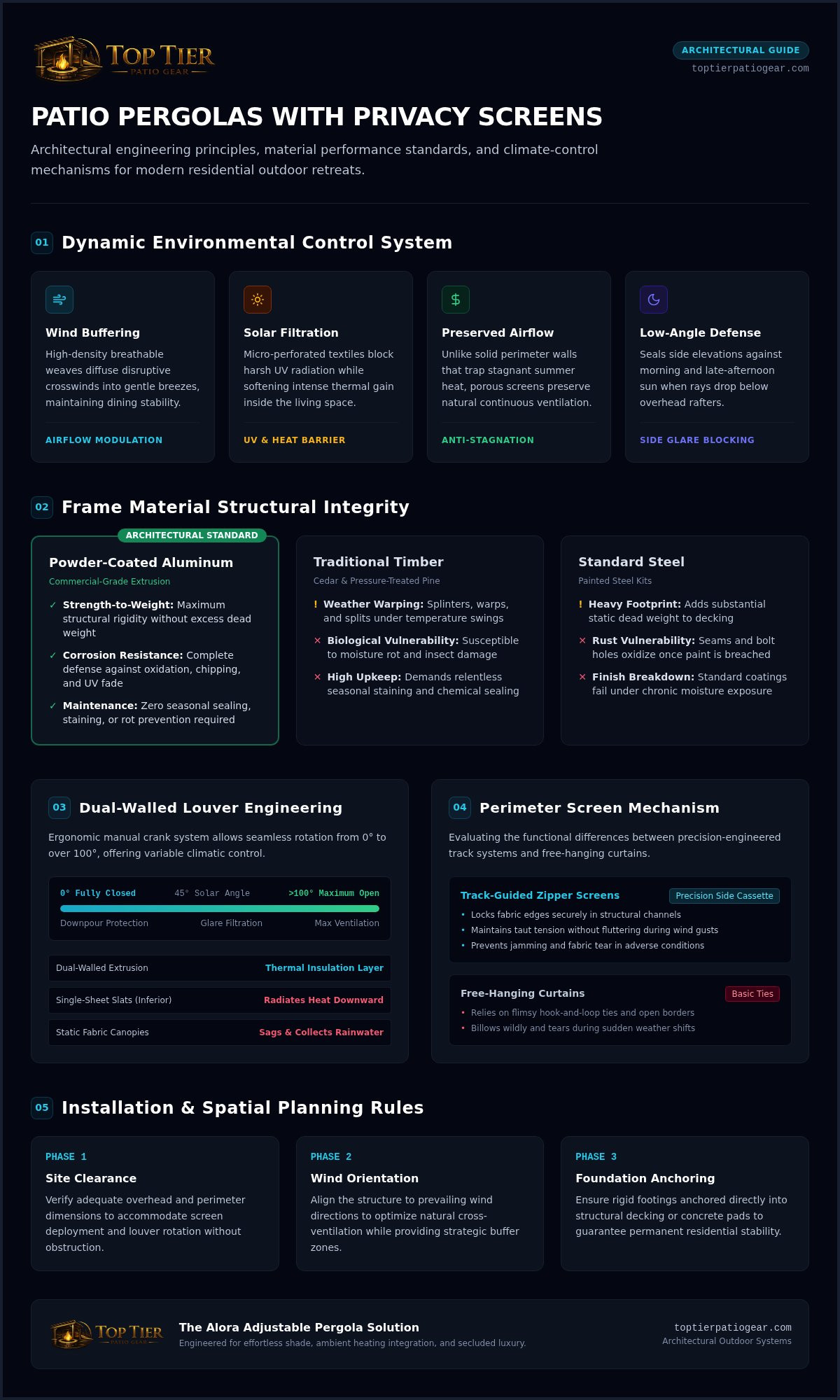
- Discover why an architecturally engineered patio pergola with privacy screens serves as the foundation for modern outdoor living, delivering dynamic wind control, UV filtration, and visual seclusion.
- Evaluate structural material integrity by comparing commercial-grade, powder-coated aluminum to traditional timber, focusing on dual-walled adjustable louvers and integrated drainage systems.
- Compare track-guided zipper screens against free-hanging curtains to select durable, high-density textiles that won't tear or bind during high winds.
- Master the spatial planning rules for site clearance, prevailing wind orientation, and secure foundation anchoring to guarantee long-term stability.
- Envision an elevated outdoor room by anchoring your layout with the versatile Alora adjustable pergola, harmonizing effortless shade with ambient heating and refined lounge seating.
Why a Patio Pergola with Privacy Screens Defines Modern Outdoor Luxury
True luxury outdoors isn't merely about expansive square footage; it's about intimacy. Without boundary management, even the most beautifully finished stone terrace can feel exposed and underutilized. Integrating an architectural patio pergola with privacy screens transforms vulnerable decking into an intentional sanctuary, establishing a distinct barrier against neighboring sightlines without sacrificing open-air immersion. Historically, exploring what is a pergola meant examining open garden colonnades designed solely for climbing vines, but modern residential architecture demands far greater environmental control.
Today's integrated systems solve multiple outdoor challenges simultaneously. Beyond shielding your space from adjacent two-story windows, premium vertical screens offer essential climate management:
- Wind buffering: Breathable, high-density weaves diffuse disruptive crosswinds into gentle breezes, keeping outdoor dining settings stable.
- Dynamic solar filtration: Micro-perforated textiles block harsh UV radiation while softening intense thermal gain.
- Preserved airflow: Unlike solid perimeter fences that trap stagnant summer heat, porous screens maintain continuous natural ventilation.
This deliberate balance elevates an exposed patio into a fully realized alfresco retreat, blurring the boundary between indoor sophistication and open-sky living.
The Evolution of Backyard Privacy and Solar Comfort
Traditional open-slat pergolas leave your lounge vulnerable to blinding, low-angle morning and late-afternoon glare. Because the sun drops below overhead rafters for hours each day, overhead-only protection falls short. Retractable perimeter screens bridge this architectural gap, sealing the side elevations against shifting angles of light without plunging the interior into darkness.
Architectural Value: Elevating Property Aesthetics and Utility
Clean vertical columns and crisp roof lines establish immediate architectural proportion, transforming formless yards into purposeful outdoor rooms. A dedicated patio pergola with privacy screens effectively expands your usable residential footprint through autumn chill and summer heat alike, delivering visual synergy that complements contemporary facades and manicured borders.
Key Engineering Features to Evaluate in a Privacy Screen Pergola
Selecting an enduring patio pergola with privacy screens requires looking past surface aesthetics to scrutinize the underlying engineering. Inferior kits often rely on generic hanging curtains secured by flimsy hook-and-loop ties, which billow wildly and tear during sudden weather shifts. An architectural system uses precision-engineered side cassettes and track-guided channels. This secure design locks the fabric edges in place, maintaining taut fabric tension and dependable stability even in gusty winds.
Frame Construction: Aluminum Superiority Over Wood and Steel
Traditional wood pergolas bring natural charm, but they demand relentless seasonal upkeep. Cedar and treated pine naturally warp, splinter, and split, requiring ongoing staining and sealing to prevent rot and insect damage. Steel kits, while rigid, tend to rust quickly at welded seams and bolt points once moisture penetrates standard paint coats.
Commercial-grade extruded aluminum eliminates these maintenance burdens entirely. A durable powder-coated finish provides complete resistance against oxidation, chipping, and UV fading. Aluminum also provides a superior strength-to-weight ratio. It creates an exceptionally rigid patio pergola with privacy screens that anchors securely to your terrace without introducing unnecessary structural dead weight or rotting over time.
Roof Mechanics: Louver Adjustability and Internal Drainage
Superior overhead control hinges on dual-walled louver design. Unlike thin single-sheet slats that radiate heat downward, dual-walled aluminum louvers provide thermal insulation while pivoting from 0 to over 100 degrees via an ergonomic manual crank. This adjustability lets you capture cool breezes, angle away intense midday glare, or close the canopy completely against unexpected downpours. It easily outperforms static fabric canopies, which sag and collect rainwater, as well as clear polycarbonate sheets that yellow over time.
Water management is equally critical. Premium systems incorporate concealed perimeter guttering directly within the horizontal framework. When louvers close, rainwater channels into these integrated gutters and flows down through hidden spouts inside the support posts, discharging cleanly at the base. To explore outdoor architecture engineered with these exact structural standards, browse the selection at Top Tier Patio Gear.
Selecting the Ideal Privacy Screen System for Your Patio
The operational success of an outdoor enclosure depends heavily on its vertical screening technology. Many homeowners make the mistake of pairing a robust overhead frame with loose, hanging fabric curtains or retrofitted lattice panels. These improvisations often fail when subjected to outdoor stress. Free-hanging drapes billow erratically in slight breezes, strain mounting hooks, and flap noisily during quiet evenings. Fixed lattice panels, while rigid, create permanent visual blockades that trap stagnant heat and cannot retract when you prefer an open vista.
A purpose-built patio pergola with privacy screens utilizes precision-fit perimeter tracks to secure the vertical textiles. Integrated side channels hold the edges under constant tension, preventing blowout and fabric flutter while providing clean, continuous seclusion along every wall.
Screen Material Science: Opacity, Breathability, and Tear Resistance
Textile selection dictates how effectively your outdoor room balances solar shielding with visual comfort. Premium screens use dense, PVC-coated polyester or textilene weaves engineered with a 5% to 10% openness factor. This micro-aperture profile blocks up to 95% of harsh glare while maintaining continuous passive air exchange.
During peak daylight hours, the optical properties of this weave deliver complete daytime privacy from outside observers, yet maintain soft, filtered visibility looking outward toward your garden. The synthetic coating delivers complete resistance against moisture absorption, mildew growth, and premature fabric sagging under sustained summer humidity.
Mechanism and Operation: Smooth Pull-Down Tracks vs. Fixed Screens
Operational ease determines how frequently you engage your outdoor space. High-end systems avoid cord tangles by utilizing weighted, spring-counterbalanced pull-down bars that glide inside aluminum track channels. This track-guided design guarantees reliable performance:
- Enclosed headbox cassettes: Protective aluminum housings shield the screen roll from dirt, bird droppings, and UV exposure whenever retracted.
- Edge-retention tracks: Dual vertical rails hold the fabric perimeter firmly along the posts, preventing annoying screen displacement during sudden wind gusts.
- Smooth intermediate stops: Intuitive manual tension allows you to drop the screen completely or park it halfway to shade high-angle rays.
Investing in a patio pergola with privacy screens engineered with full track integration ensures your shelter remains taut, silent, and effortlessly responsive to shifting weather conditions throughout the season.
Planning, Sizing, and Foundation Preparation for Installation
Careful site planning ensures your outdoor retreat functions seamlessly from day one. Many homeowners make the mistake of measuring only overall patio dimensions without accounting for dynamic spatial clearances. Installing a patio pergola with privacy screens requires evaluating how furniture placement, foot traffic paths, and exterior architecture interact once the vertical blinds drop.
Executing an intentional site layout involves four primary preparation steps:
- Map internal living space: Account for table edge margins and deep-seating recline clearance so furnishings never collide with deployed side screens.
- Assess environmental clearances: Check overhead space beneath roof eaves, gutters, and low-hanging branches while verifying prevailing wind paths.
- Inspect the anchoring foundation: Confirm your mounting surface offers sufficient structural mass, whether pouring dedicated footings or anchoring to an existing slab.
- Review municipal and HOA guidelines: Check local building codes for property setbacks, attached structure rules, or neighborhood design covenants before ordering.
Determining the Right Footprint for Dining and Lounging
Comfort requires breathing room. For an outdoor dining area, allow at least 36 inches of perimeter space around your dining table so guests can push back chairs freely without pressing into screen fabric. When planning around deep lounge furniture or swivel rocking chairs, leave clear 30-inch walkways to guarantee effortless navigation around support posts when every side enclosure is lowered.
Foundation Anchoring: Securing Your Investment Against the Elements
A rigid, level base is the single most important factor for flawless mechanical operation. If corner posts sit out of square by even a fraction of an inch, vertical track guides will bind, causing unnecessary friction on pull-down screens.
Direct mechanical fastening into reinforced concrete provides the highest structural integrity. Heavy-duty stainless steel wedge or expansion bolts anchor baseplates securely, distributing uplifting wind loads across the slab. If you are mounting on a raised timber or composite deck, surface boards alone will not suffice. You must install solid structural blocking beneath the deck boards, tying the pergola posts directly into the underlying subframe joists. To find durable outdoor structures that fit your exact property layout, explore patio shade options at Top Tier Patio Gear.
Curating Your Outdoor Oasis: The Alora Adjustable Pergola Solution
A beautifully designed outdoor room requires thoughtful synergy between structural shelter and comfortable appointments. While freestanding canopies often look disconnected from their surroundings, a comprehensive patio pergola with privacy screens serves as an intentional architectural anchor. By establishing crisp borders and dynamic overhead shade, it creates an inviting setting for shared meals, private conversations, and relaxed evenings.
The Alora Modern Outdoor Adjustable Pergola: Designed for Sophistication
For homeowners who value both durability and refined aesthetics, the Alora Modern Outdoor Adjustable Pergola with screens offers a premier, all-in-one outdoor solution. Its extruded powder-coated aluminum structure stands up to intense summer heat and wet winters without warping or chipping. Rather than sourcing third-party vertical blinds that might rattle or jam, the Alora incorporates dedicated screen integration directly into its frame channels. This thoughtful engineering lets you dial in privacy, filter intense low-angle light, or raise the screens completely with effortless motion. To explore how this architectural system can elevate your backyard living area, discover the full collection at Top Tier Patio Gear.
Creating a Multi-Season Sanctuary: Fire Tables and Ambient Warmth
True alfresco luxury extends well beyond bright summer afternoons. By incorporating targeted climate elements, your sheltered terrace remains warm and welcoming as temperatures dip:
- Low-profile fire features: Anchor your central lounge with the Matteau Low 60 In. L X 12 In. H Outdoor Rectangular Concrete Composite Propane Fire Table. Its substantial, minimalist profile provides a warm visual centerpiece and comforting radiant warmth without blocking sightlines across the lounge.
- Perimeter supplemental heating: Position a 46000 Btus Aluminum Propane Standing Patio Heater near entrance points, or introduce a 50 Hz Portable Electric Outdoor Patio Space Heater for focused, directional warmth. Because the deployed screens buffer chilly crosswinds, heated air stays inside your seating zone instead of blowing away.
- Cohesive lounge seating: Complete the retreat with 8 Pieces Patio Furniture Sets with Swivel Rocking Chairs. The gentle motion and deep cushions invite lingering conversations, while a Nautica 7-piece rectangular outdoor patio aluminum dining table and chair set by Midway handles elegant open-air dinner parties under the louvers.
Curating these high-end elements under a patio pergola with privacy screens turns an ordinary backyard into a true four-season sanctuary.
Elevate Your Terrace into an Enduring Outdoor Sanctuary
Creating an inviting outdoor living room begins with structural permanence and deliberate comfort. By investing in an architectural-grade patio pergola with privacy screens, you eliminate the constant maintenance of wood and the vulnerability of loose fabric shades. You gain total command over changing weather, shielding your family from harsh midday glare, sudden winds, and intrusive sightlines while maintaining a fresh, breathable atmosphere.
When you complement robust powder-coated aluminum framing with integrated screen systems engineered specifically for effortless privacy and sun control, your patio becomes a true destination. Complete your private retreat by exploring our curated nationwide catalog of premium outdoor dining sets, concrete fire tables, and radiant patio heating. Take the first step toward refined alfresco hosting today; discover the Alora Modern Outdoor Adjustable Pergola at Top Tier Patio Gear and build a backyard sanctuary you'll cherish for years to come.
Frequently Asked Questions
Can a patio pergola with privacy screens withstand heavy rain and wind?
Yes, when properly anchored and engineered with track-guided channels, a high-grade patio pergola with privacy screens can handle substantial rainfall and high winds. Closed dual-walled aluminum louvers channel water through internal perimeter gutters, while track-guided vertical screens remain taut without billowing. During extreme storm warnings or gale-force conditions, retracting the screens into their protective cassettes and opening louvers minimizes structural wind resistance.
Do privacy screens block the view from the inside looking out?
No, premium privacy screens maintain outward visibility during the daytime while blocking inbound sightlines. High-grade textilene or PVC-coated polyester woven with a 5% to 10% openness factor creates an effective optical shield. The brighter ambient light outdoors reflects off the exterior weave, preventing neighbors from peering in. Meanwhile, individuals sitting inside the shaded retreat enjoy a softened, glare-free view of their surrounding landscaping.
What is the main advantage of an adjustable louvered pergola over a traditional open pergola?
Dynamic environmental control is the primary advantage of an adjustable louvered system. Traditional open-rafter pergolas provide fixed, partial shade and zero defense against downpours or shifting sun angles. Adjustable louvered roofs let you pivot slats from 0 to over 100 degrees via a manual crank, enabling you to welcome warming morning light, block intense midday UV rays, or form a watertight ceiling when sudden showers pass overhead.
Can privacy screens on a pergola be adjusted to partial heights?
Yes, high-end track-guided privacy screens can be positioned at various intermediate heights. Counterbalanced spring mechanisms and tensioned vertical side tracks allow you to pull the screen down smoothly and lock it wherever you prefer. This versatility lets you shield low-angle afternoon sun or direct breezes while keeping lower sightlines open to your lawn, patio furniture, and garden pathways.
What type of foundation or surface is required to install an aluminum pergola?
An aluminum pergola requires a solid, level, and structurally reinforced foundation such as a cured concrete slab or dedicated concrete footings. Securing structural baseplates with heavy-duty expansion anchors prevents shifting and uplift. While installations on wood or composite decks are possible, they require structural blocking directly underneath the framing joists rather than fastening to surface decking alone. Pavers must also be bedded with concrete piers underneath to ensure true stability.
How do you clean and maintain outdoor pergola privacy screens?
Regular rinsing with clean water and gentle washing with mild soapy water is all that's needed to maintain outdoor screens. Use a soft-bristle brush or microfiber cloth to remove dust, pollen, and debris from the fabric and vertical track channels. Rinse thoroughly with a garden hose on a low-pressure setting and let the fabric dry completely before retracting it into the cassette. Avoid harsh chemical cleaners or pressure washers, which can degrade protective coatings.
Is an aluminum pergola with screens suitable for winter weather?
Yes, powder-coated aluminum naturally resists rust, freeze-thaw cracking, and moisture damage across harsh winter seasons. For optimal winter care, keep the vertical privacy screens retracted safely inside their protective cassettes to avoid freezing moisture and heavy lateral wind loads. Leaving roof louvers slightly tilted open during heavy snowstorms prevents excessive snow accumulation across the overhead span, ensuring your patio pergola with privacy screens stays protected until spring warmth returns.