Portable Electric Patio Heater: A Practical 2026 Buying Guide
The easiest heater to move may be the wrong one for your patio. A portable electric patio heater can make an outdoor evening more inviting, but comfort depends on more than portability. Wind exposure, seating distance, and access to a suitable outlet all matter. Instead of focusing only on how easily a heater can be repositioned, ask whether its warmth can reach the people and area you want to heat.
This guide helps you choose for your patio layout and plans, not just a product label. We’ll cover heat delivery, covered versus open settings, power access, and safety details to check before buying, including clearance and cord instructions. Some designs, such as infrared heaters, direct warmth toward people and objects, which may suit exposed areas better than warming the surrounding air. Top Tier Patio Gear lists a portable electric outdoor patio space heater specified at 50 Hz. Before deciding whether it fits your setup, confirm its voltage, frequency compatibility, wattage, outdoor-use rating, and safety details. These checks help you weigh flexibility and comfort against your practical requirements.
Key Takeaways
- Compare portable electric designs with mounted heaters and portable fuel-burning options to find a format that suits your routine.
- Map your seating area and possible heater positions to judge whether warmth can reach the places where people gather.
- Use the product manual and verified specifications to assess outdoor suitability, weather protection, and electrical requirements.
- Evaluate a portable electric patio heater by how its design fits your setting, not by portability alone.
- Top Tier Patio Gear lists a 50 Hz portable electric outdoor patio space heater. Review its documented specifications before deciding whether it suits your setup.
What a Portable Electric Patio Heater Can, and Cannot, Do Outdoors
A portable electric patio heater is a movable electric heat source intended for outdoor use only when its documented rating and instructions permit that setting. Portability describes how a heater can be repositioned, not how much space it warms or whether it can withstand outdoor conditions. The Patio heater overview introduces the broader category, but the individual unit’s specifications determine how it should be used.
Think of outdoor heat as focused comfort, not a promise to warm an entire open patio. The seating area near a heater may feel more pleasant while a distant dining spot stays cool. Your experience depends on the heater’s design, its position and distance from people, and how exposed the space is. Without verified performance and coverage specifications, don’t assume a precise heating area.
How electric patio heat reaches people
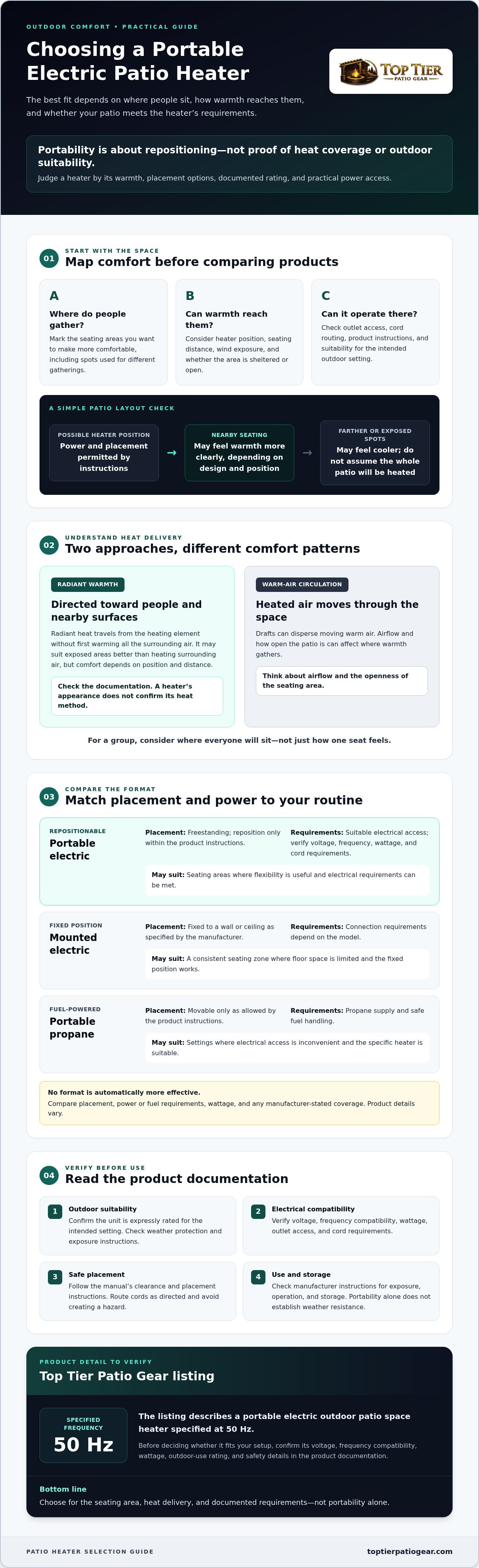
Electric heaters can deliver warmth in different ways. Radiant heat travels from the heating element to people and nearby surfaces without first warming all the surrounding air. Warm-air circulation works differently: heated air moves through the space, and drafts can disperse it. These approaches aren’t interchangeable, and a heater’s appearance doesn’t confirm which method it uses. Check the product documentation rather than assuming it’s an infrared model.
Position also affects how warmth feels. Someone sitting close to a radiant source may feel its warmth more clearly than someone across the patio. With circulating warm air, airflow and the openness of the space can affect where warmth gathers. For a group, consider where people will sit and whether they’ll face the heater instead of judging comfort from a single spot.
Where portability is useful, and where it has limits
Mobility can help when your routine shifts between suitable seating zones, such as a lounge arrangement and a table. You can reposition a heater to suit the gathering if the power source, cord arrangement, and manufacturer instructions allow it. Portability makes a space more adaptable, but it doesn’t remove the need to plan where the unit can operate safely.
Open sides, wind, and greater distance can all reduce perceived comfort, particularly when warmth is concentrated around the heater rather than carried through the air. A sheltered seating zone may feel different from an exposed one, even with the same heater. Treat the unit as a way to add warmth near people, not as a substitute for heating every corner of a large, open patio.
A carryable design doesn’t prove that a heater is weather resistant. Confirm that the product is expressly rated for your intended outdoor setting, and follow its instructions for exposure, placement, and storage. A portable electric patio heater is most useful when its heat delivery and documented requirements suit the space, not simply because it can be moved.
Which Portable Electric Patio Heater Design Fits Your Outdoor Routine?
The right format depends on where you gather, how often your setup changes, and what power or fuel is practical in that spot. Compare placement and requirements first, then assess each heater’s wattage and any manufacturer-stated coverage. These details vary by product, so don’t use one model’s figures to predict another’s comfort or reach.
| Format | Placement | Power or fuel | May suit |
|---|---|---|---|
| Portable electric | Freestanding and repositionable within the limits of its instructions | Electrical access; verify voltage, frequency, wattage, and cord requirements | Seating areas where you want flexibility and can meet the unit’s electrical requirements |
| Mounted electric | Fixed to a wall or ceiling as specified by the manufacturer | Connection requirements depend on the model | A consistent seating zone where floor space is limited and the fixed position works |
| Portable propane | Movable only as allowed by the product instructions | Propane supply and safe fuel handling | Settings where electrical access is inconvenient and the specific heater is suitable |
Portable versus mounted electric heaters
A portable electric unit offers more freedom to adjust its position when seating arrangements change. That flexibility helps only if a suitable outlet is within reach and the cord can be routed as the manual directs, without creating a hazard. A mounted heater stays in a chosen location, which can preserve floor space but limits flexibility. Neither format is automatically more effective. Compare the intended position with the manufacturer’s instructions and stated performance.
Electric versus propane for portable outdoor warmth
Electric heaters rely on compatible electrical access. Propane heaters depend on a fuel supply, and users need to follow product-specific fuel, placement, and operating instructions. Warmth and suitability vary by unit and outdoor conditions, so don’t choose based on fuel type alone. For a fuller comparison, see propane and electric patio heater differences.
Top Tier Patio Gear lists a 50 Hz portable electric outdoor patio space heater and a 46,000 BTU propane standing patio heater. Those listing details alone don’t establish compatibility or suitability for your patio. Before choosing a portable electric patio heater, confirm its voltage, frequency compatibility, wattage, outdoor-use rating, and documented requirements. The U.S. Consumer Product Safety Commission offers general portable heater safety guidance; use the specific product manual for outdoor placement and operation. After assessing your setup, review Top Tier Patio Gear’s listed patio heaters and compare their documented specifications.
How to Judge Portable Electric Heater Comfort in Your Patio
Start with your patio, not a heater’s advertised reach. Sketch the seating area and mark where people gather, where a heater could stand, and which suitable outlet it could use. This map can show whether warmth would reach the group or be blocked by furniture, a wall, or the limits of safe placement.
A simple patio assessment before comparing products
Describe the setting as open, partially sheltered, or enclosed, then consider how conditions vary across it. An open edge may leave seats more exposed, while a sheltered corner may feel different. Note where wind commonly enters, but don’t assume a screen or roof makes a heater suitable for that setting. Follow the product’s outdoor-use rating and instructions.
- Mark the seating zone: Include the places people actually sit, not just the patio’s overall dimensions.
- Choose possible heater positions: Measure the distance to the nearest and farthest seats, then check the manufacturer’s placement and clearance guidance.
- Locate power access: Identify the outlet and possible cord route. Confirm the product’s electrical requirements and permitted cord arrangement before deciding that a position is practical.
- Consider the gathering: Compare the manufacturer’s guidance with the number of people and the seat arrangement. A layout that directs warmth toward one chair may not suit a group spread around a table.
For a broader design decision, consider whether you want directed warmth or a shared focal point. This guide to patio heater versus fire pit considerations can help frame that choice.
Why advertised coverage needs context
A coverage figure is useful only when you know what it describes. Check whether the manufacturer’s measurement assumes a particular placement, degree of shelter, or definition of comfortable warmth. If those conditions aren’t explained, treat the figure as a reference point, not a guarantee for your patio.
Wattage alone can’t tell you how comfortable a seating zone will feel. Heater design, distance, exposure, and heat direction all matter. Compare each product’s documented wattage and stated coverage, then check whether its instructions support the position you marked on your patio map. A space heater buying guide can provide additional context on comparing heater features, but you still need to confirm outdoor suitability in the product documentation.
Use these details to assess a portable electric patio heater against how your patio is actually used, rather than relying on a universal square-foot estimate or an idealized product description.
What to Check for Safe, Practical Outdoor Electric Use
Before choosing a portable electric patio heater, read its manual and verify that its electrical requirements match the outlet and outdoor setting you have in mind. A portable design doesn’t establish that a heater can be used outside, exposed to weather, or connected to a particular power supply. Use this checklist to confirm the product documentation before purchase and again before operation.
- Start with the manual and electrical specifications. Check the required voltage, frequency, wattage, and plug type. Confirm that the manufacturer approves your intended use and that the outlet and circuit are suitable. If you’re unsure about the outlet or wiring, ask a qualified professional before connecting the heater.
- Verify outdoor and weather suitability. Look for documentation that expressly supports use in your intended outdoor conditions. Check weather-protection limits, including restrictions on exposure to rain or moisture. Don’t infer outdoor suitability from the product name, appearance, or portability.
- Check safety markings and features. Verify any claimed certification in the product documentation; don’t assume a heater is certified because it is sold for outdoor use. Read the manufacturer’s instructions to confirm which safety features are included and understand their limits.
- Plan a stable, clear position. Place the heater only on a stable, manufacturer-approved surface, and follow its specified clearances. Keep it away from obstructions and materials the manual prohibits near the unit. Don’t place it where it could be knocked over or block movement through the seating area.
- Review the cord route and operating instructions. Follow the manufacturer’s cord requirements and avoid routes that create trip hazards or bring the cord into contact with hot surfaces or standing water. Use the heater only as directed, including instructions for supervision, weather exposure, storage, and cleaning.
Pay particular attention to frequency compatibility
Top Tier Patio Gear lists a portable electric outdoor patio space heater with a 50 Hz specification. That detail alone doesn’t establish compatibility with your intended US power supply. Before deciding whether it fits your setup, verify its voltage and frequency requirements, wattage, plug type, outdoor-use rating, and instructions in the product documentation. If a specification is missing or unclear, seek confirmation rather than assuming the heater will work.
Safety is part of choosing well. Once you’ve checked the requirements for your outlet and patio, review patio heater listings and compare their documented specifications.
Choosing a Portable Electric Patio Heater from Top Tier Patio Gear
A confident choice starts with your patio, not a product label. Consider where people sit, how exposed the area is, and whether a suitable outlet can reach the planned heater position. Then compare the product’s documented electrical requirements, outdoor-use instructions, and placement guidance with your setup. This helps you weigh comfort and design without treating portability as proof of performance or suitability.
When the listed portable electric heater may be worth considering
Top Tier Patio Gear lists a 50 Hz Portable Electric Outdoor Patio Space Heater. Its movable format may be useful if you want flexibility between seating areas, provided the cord can reach safely and the manufacturer’s instructions allow the chosen placement. The listing’s frequency detail alone doesn’t confirm compatibility with your power supply or suitability for your patio.
Before deciding, confirm the heater’s voltage, frequency compatibility, wattage, outdoor-use rating, weather-protection limits, and any applicable safety certifications in its product documentation. Check availability as well. If a detail you need isn’t stated or is unclear, seek confirmation before relying on the heater for your intended use.
A final checklist before choosing
- Match the setting: Confirm that the heater is intended for the precise outdoor environment where you plan to use it.
- Confirm the power supply: Compare its documented voltage, frequency, wattage, and plug requirements with the available outlet. If outlet suitability is uncertain, consult a qualified professional.
- Review placement: Check the required clearances, surface, cord route, and weather-exposure restrictions in the manual.
- Assess comfort realistically: Use manufacturer-stated performance information to judge whether the heater may suit your seating layout and expected use. Don’t assume it will warm an entire open patio.
- Consider the finished space: Choose a format and appearance that work with your outdoor arrangement, while putting verified requirements and safe operation first.
A portable electric patio heater is worth considering when its documented specifications, power needs, and placement instructions align with how you use your patio. Explore Top Tier Patio Gear’s outdoor-heating selection and verify each product’s details before choosing.
Make Your Patio Comfortably Yours
Start with the space you want to enjoy. Map the seating area, consider how open or sheltered it is, and set comfort expectations around the people nearby rather than assuming a heater will warm the entire patio. Then compare each model’s documented heat delivery and coverage information with your layout.
Before choosing a portable electric patio heater, verify its voltage, frequency, wattage, outdoor-use rating, and placement instructions against your power supply and intended setting. Top Tier Patio Gear lists a portable electric outdoor patio space heater specified at 50 Hz, as well as a propane standing patio heater for readers comparing approaches. Check each product’s current specifications and availability before deciding whether it suits your needs.
Thoughtful selection brings together practical power access, safe placement, comfort, and a design that feels at home in your outdoor space. Explore outdoor heating at Top Tier Patio Gear and compare the options as you plan more inviting evenings outside.
Frequently Asked Questions
Is a portable electric patio heater suitable for an open patio?
It can be suitable if the specific heater is rated for outdoor use and its electrical requirements and placement instructions fit your patio. Comfort may be more localized in an open area, where wind and distance can affect how warmth reaches people. Check the manufacturer’s stated use and performance details, then consider whether you can position the heater safely near the seating zone you want to warm.
Can a portable electric patio heater be used in the rain?
Only if the manufacturer’s documentation explicitly permits use in the rain and the conditions match the heater’s stated weather protection. Don’t assume a portable design or an outdoor product label means it can get wet. Check the manual for limits on rain, moisture, and storage, and follow its instructions if the weather changes. If the documentation doesn’t clearly confirm suitability, keep the heater out of wet conditions.
How much area can a portable electric patio heater warm?
There isn’t one reliable area figure for every heater or patio. Warmth depends on the unit’s design and specifications, placement, distance to the seating, and outdoor exposure. Look for manufacturer-stated coverage and check how it was determined, if that information is provided. Treat wattage as a product specification, not a guarantee of comfort across a particular square footage or an entire open patio.
What should I check before plugging in an outdoor electric heater?
Read the manual first. Confirm the heater’s outdoor-use rating, voltage, frequency, wattage, and plug requirements against the available power supply. Check the placement instructions, clearances, surface requirements, and approved cord arrangement. A listing that specifies 50 Hz, for example, doesn’t by itself confirm compatibility with your outlet. If the electrical specifications or outlet suitability are unclear, consult a qualified professional before using the heater.
Are infrared and radiant patio heaters the same thing?
Not exactly. Infrared describes a form of radiant heat, which transfers warmth to people and surfaces rather than first heating all the surrounding air. “Radiant” is the broader description of how heat is delivered, while infrared identifies a particular type. Don’t assume a patio heater uses infrared based on its shape or appearance. Check the product specifications for its stated heating technology and use those details when comparing models.
Can I use an extension cord with a portable electric patio heater?
Don’t use an extension cord or power strip unless the product instructions specifically approve that setup. Electric heaters should generally be plugged directly into a suitable wall outlet, and the manual’s cord and electrical requirements take priority. Plan the heater’s position around safe outlet access rather than stretching a cord across a walkway or near hot surfaces or standing water. Ask a qualified professional if you’re uncertain about the outlet.
Is an electric or propane patio heater better for portable outdoor use?
Neither is universally better. Choose according to your power access, patio layout, and the specific heater’s instructions. Electric models depend on compatible electrical access, while propane models require fuel and careful handling. Performance and suitability vary by product and outdoor conditions, so compare verified specifications and safe-placement requirements. Top Tier Patio Gear lists both a portable electric outdoor patio space heater and a propane standing patio heater for shoppers considering these approaches.