Propane Outdoor Heating: 2026 Buyer’s Guide
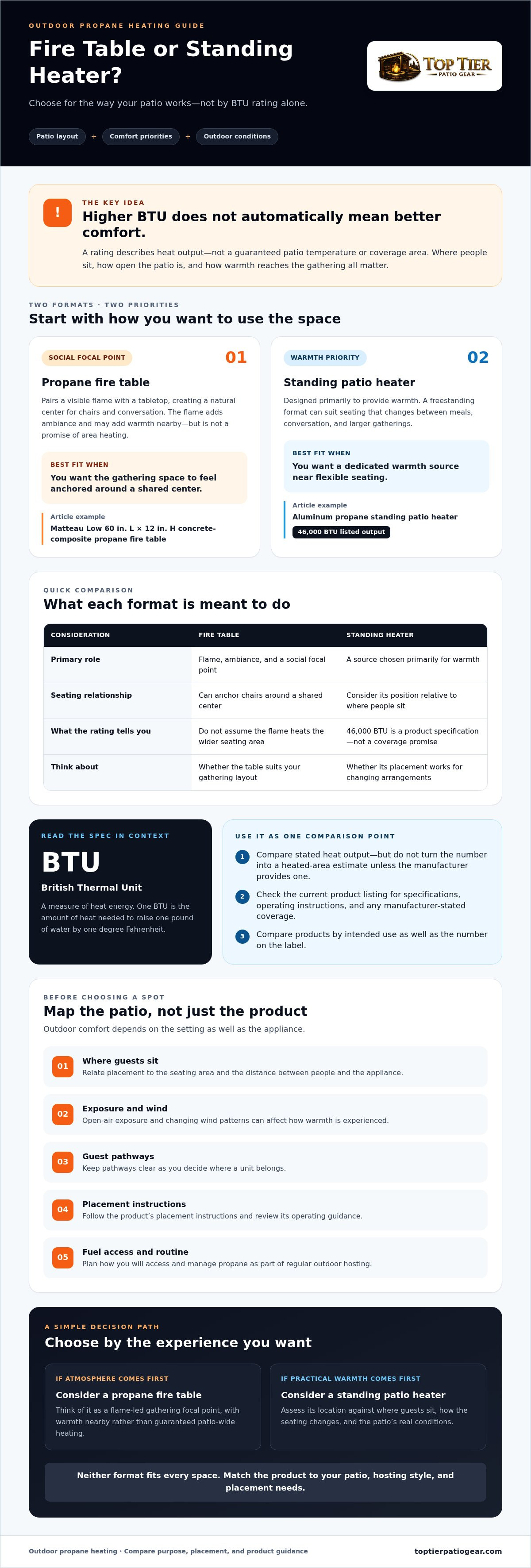
The higher-BTU heater isn’t automatically the better choice. The right propane setup depends on where people sit, how you host, and how heat can reach the gathering area. When comparing outdoor heating solutions propane can power, start with those practical details, not a number on a product label.
It’s understandable to want a simple answer when comparing a fire table with a standing patio heater. One can make a patio feel more like a relaxed outdoor living room, while the other is designed primarily to provide warmth. Neither format suits every space, and a BTU rating alone can’t promise a particular level of comfort.
This guide compares propane fire tables and standing heaters to help you choose a setup that fits your patio, comfort priorities, and hosting style. You’ll learn how to read specifications in context, consider placement and fuel access, and account for outdoor conditions before you buy. The goal is a more comfortable gathering space, planned with both atmosphere and practical use in mind.
Key Takeaways
- Match your heater to your patio layout and the way guests gather, rather than choosing by output rating alone.
- Use propane to create either a design-led gathering point or a dedicated source of warmth, depending on your priorities.
- Before choosing a format, assess open-air exposure, wind patterns, guest pathways, and the product’s placement instructions.
- Plan how you’ll access and manage fuel as part of your regular outdoor hosting routine.
- Compare the Matteau concrete-composite propane fire table with the 46,000-BTU aluminum standing patio heater by considering which better fits your space and hosting style.
Outdoor propane heating solutions: what are your options?
A comfortable patio can make an evening outdoors feel more inviting, whether you’re gathering around a flame or adding warmth near flexible seating. The main outdoor heating solutions propane can power for residential patios fall into two formats: propane fire tables and standing patio heaters. They serve different priorities, so start by asking whether atmosphere or practical warmth matters most.
A fire table pairs a flame with a tabletop and can give a seating area a natural focal point. A standing heater is chosen primarily to provide warmth. Neither format guarantees a particular level of comfort across every patio. Results depend on the space, outdoor conditions, placement, and coverage stated by the manufacturer. Product ratings describe specifications, not a promise of how warm every guest will feel.
Propane fire tables: warmth with a social focal point
A fire table can anchor chairs around a shared center, shaping the patio into an inviting place to pause and talk. Its flame contributes ambiance and may add warmth nearby, but it shouldn’t be treated as guaranteed area heating. Top Tier Patio Gear’s Matteau Low 60 In. L X 12 In. H Outdoor Rectangular Concrete Composite Propane Fire Table is one design-led example. Explore the propane fire table guide for more ideas on making this format part of an outdoor gathering space.
Standing propane patio heaters: warmth for flexible seating
If your seating layout shifts between meals, conversation, and larger gatherings, a freestanding heater may suit the changing arrangement better than a fixed focal point. Consider its position in relation to where people sit, while keeping pathways clear. The 46,000-BTU aluminum propane standing patio heater from Top Tier Patio Gear is one option to compare, but its rating alone doesn’t establish how much space it will comfortably heat.
BTU stands for British Thermal Unit (BTU), a measure of heat energy. Before choosing a heater, check the current product listing for its specifications and operating instructions, including any manufacturer-stated coverage. Then consider how open the patio is, how wind may affect comfort, and whether the unit’s placement suits your seating plan. A flame can set the scene. A heater selected for warmth should be assessed against the space and its real conditions.
How propane outdoor heating works and what BTU can tell you
A heater’s BTU rating can help you compare stated heat output, but it can’t tell you exactly how comfortable your patio will feel. BTU stands for British thermal unit, a measure of energy: one BTU is the amount of heat needed to raise the temperature of one pound of water by one degree Fahrenheit. As the U.S. Energy Information Administration explains in its overview of the heat content of fuels, BTUs also help describe the energy in fuels. A BTU rating describes heat output, not a guaranteed temperature or coverage area on your patio.
What a propane heater’s BTU rating does and does not mean
Use BTUs as one comparison point, then consider the heater’s format and intended use. A fire table is typically selected for its flame and gathering-place appeal. A standing patio heater is designed primarily to provide warmth. Comparing the numbers without that context can be misleading, and a higher rating doesn’t automatically mean a more comfortable setup for your seating area.
Top Tier Patio Gear’s standing propane patio heater is listed at 46,000 BTUs. That figure is specific to this product, not a universal benchmark or a promise about how much patio it will heat. Before buying, review the current listing for its specifications and any manufacturer-stated coverage. Don’t convert the rating into a heated-area estimate unless the manufacturer provides that information.
Fuel, flame, and warmth in an outdoor setting
Propane is the fuel source. During operation, the appliance uses that fuel to produce heat, but the product’s design shapes how you should think about its role. A fire table’s visible flame can lend atmosphere and create a natural center for conversation. A standing heater is intended primarily as a source of warmth. The flame’s presence alone doesn’t establish how effectively a fire table will heat the wider seating area.
Real-world comfort also depends on the patio’s exposure, how far guests sit from the appliance, the furniture arrangement, and changing outdoor conditions. Wind and open-air exposure can affect how warmth is experienced, so treat product coverage as manufacturer guidance rather than a guarantee for every layout. A well-placed unit may suit one seating arrangement but feel less useful if guests are farther away or the gathering space is exposed.
Before operating any unit, consult its product manual for approved fuel, setup, operation, and maintenance instructions. Follow the manufacturer’s placement and use directions rather than assuming they’re identical across propane products. For a closer look at propane heating options, compare the listed product details with your patio’s layout and hosting needs.
Propane fire table vs. standing patio heater: which fits your space?
Choose based on how you want the patio to function. A fire table makes the flame part of the gathering. A standing heater is a dedicated appliance that may offer more flexibility as seating arrangements change. Neither format is universally warmer or more efficient. Compare the manufacturer’s stated use and placement instructions with your space. For a broader look at the distinction, see this patio heater versus fire pit comparison.
| Consideration | Propane fire table | Standing propane patio heater |
|---|---|---|
| Primary purpose | Combines a visible flame with a shared tabletop focal point. | Designed primarily as a dedicated source of warmth. |
| Placement needs | Plan its footprint in relation to seating and nearby furnishings, and follow the product instructions. | Consider where it can be positioned relative to guests and pathways, within the stated placement limits. |
| Visual presence | A central design feature that can shape the look of the seating area. | A freestanding appliance rather than a tabletop centerpiece. |
| Seating fit | Works naturally with seating arranged around a shared center. | May suit layouts that shift between gatherings, subject to operating guidance. |
Choose a propane fire table for atmosphere and gathering
If you want guests to gather around one central feature, a fire table can help define the seating arrangement. Measure the table’s footprint against the available patio area, and consider how chairs, walking routes, and other furnishings will fit around it. Top Tier Patio Gear’s Matteau Low 60 In. L X 12 In. H Outdoor Rectangular Concrete Composite Propane Fire Table is a design-led example. Consider it as a potential social centerpiece, not a substitute for guaranteed area heating. For ideas on arranging seating, explore this fire pit chair guide.
Choose a standing propane heater for flexible placement
A standing heater may be a better match if your priority is a dedicated heater rather than a table around which the whole seating plan revolves. Top Tier Patio Gear lists a 46,000-BTU aluminum propane standing patio heater. Before deciding, check its current listing for dimensions, placement limits, and operating instructions. Compare those details with your patio’s pathways and seating positions, then follow the product manual. For general propane-appliance guidance, consult the National Propane Gas Association alongside the manufacturer’s instructions.
How to select and place propane outdoor heating for your patio
A little planning can help your heater feel like a natural part of the patio rather than an obstacle. Before choosing among outdoor heating solutions propane can power, map the gathering area and consider how guests will use it. Open-air exposure, shifting wind, nearby furnishings, and walking routes all affect where a heating feature can fit and how comfortable the space may feel.
Match the heating solution to your layout and hosting habits
Sketch the seating, paths between the house and patio, and the spot you have in mind for the heater. A fire table may suit a fixed gathering area organized around one focal point. A standing heater may better fit a layout that changes for dining, conversation, or different group sizes. In either case, compare the proposed position with the product’s placement and use instructions before settling on the arrangement.
Use this checklist to work through the decision:
- Map the seating area. Mark chairs, tables, entrances, and the routes guests use so the heater won’t interrupt movement.
- Identify your heating goal. Decide whether a flame-centered gathering feature or a dedicated heater better matches your priorities.
- Compare formats. Consider whether the layout is built around a central feature or needs more placement flexibility.
- Verify specifications. Review the product listing and manual for dimensions, stated coverage, placement limits, and operating directions. Don’t infer a coverage area from BTUs alone.
- Plan fuel access. Check the manual for approved fuel, cylinder connection and storage procedures, and routine operating or maintenance guidance.
Plan for propane handling and safe operation
Placement calls for more than choosing a convenient corner. Check how exposed the spot is to wind, whether the manufacturer’s instructions address nearby overhead structures or materials, and whether guests can move freely around the appliance. Also review the manual for ventilation guidance and other restrictions. Requirements can differ by product, so don’t assume that one model’s instructions apply to another.
Before setup or operation, read the specific manual and check applicable safety guidance. Don’t rely on a generic clearance, cylinder size, or installation assumption. Use only details confirmed for the product you’re considering. The simplest rule is this: map the space, define the goal, compare formats, verify the manual, then plan fuel access.
Ready to compare propane options against your patio plan? Explore propane outdoor heating options.
Explore propane outdoor heating solutions from Top Tier Patio Gear
Your patio plan points toward the format that best suits the way you gather. If you want a flame-centered feature with seating arranged around it, a propane fire table may be worth considering. If you’re looking for a dedicated patio heater, compare standing models and their stated specifications. If neither option feels like an obvious fit, revisit your layout, comfort priorities, and product instructions before deciding. The best outdoor heating solutions propane can support are the ones that make sense for your space and hosting habits.
Compare confirmed propane options against your priorities
Top Tier Patio Gear offers two propane formats to compare:
- Matteau Low 60 In. L X 12 In. H Outdoor Rectangular Concrete Composite Propane Fire Table: A design-led option to consider if you want a table-centered gathering feature. Think about how its footprint relates to your seating and overall patio layout.
- 46000 Btus Aluminum Propane Standing Patio Heater: A standing heater to consider if you’re looking for a dedicated patio-heating format. Its listed output is one specification to review, not a guarantee of warmth across a particular area.
These products serve different priorities, so compare them by purpose rather than assuming one will always feel warmer, last longer, or be more suitable. Review the current product listing for specifications and availability, and use the manufacturer’s instructions to understand operation and placement. Don’t assume accessories, warranty terms, or performance details that aren’t stated in the listing.
Take the next step with confidence
Before choosing, return to your checklist: does the format suit the seating plan, can guests move comfortably around it, and do the stated placement and operating instructions work for your patio? Check the product information again before purchase, especially if details may have changed. If you’re still weighing fuel types, this propane versus electric patio heater guide can help you compare the broader options.
Once you’ve identified what matters most, explore Top Tier Patio Gear’s outdoor options and compare the listed propane products with your space and hosting style. A considered choice can help make outdoor gatherings feel more inviting, without asking a product specification to promise more than it can.
Make Your Patio Ready for More Gatherings
The right choice starts with how you want to use your space. A propane fire table can bring a shared focal point to the seating area, while a standing patio heater is designed as a dedicated heat source. In either case, BTUs alone can’t guarantee comfort. Consider your layout, outdoor exposure, placement, and the manufacturer’s instructions.
Top Tier Patio Gear offers the Matteau Low 60 In. L X 12 In. H Outdoor Rectangular Concrete Composite Propane Fire Table and the 46,000-BTU Aluminum Propane Standing Patio Heater. Compare their current specifications and operating guidance with your patio before deciding. Top Tier Patio Gear serves customers across the United States, with outdoor heating solutions propane can support for different hosting styles.
Explore propane outdoor heating solutions and compare the formats with your space and hosting needs. A thoughtful choice can help make your patio a more inviting place to gather.
Frequently Asked Questions
Are propane heaters effective for outdoor patios?
Yes, propane heaters can make an outdoor patio more comfortable when the heater suits the space and is placed according to its instructions. Outdoor heating solutions propane can power vary in design and stated output, so consider seating distance, wind, and how open the area is rather than relying on BTUs alone. Check manufacturer-stated coverage and operating guidance, since outdoor conditions and patio layouts affect how warmth is experienced.
What is the difference between a propane fire table and a patio heater?
A propane fire table combines a flame with a tabletop and can serve as a visual center for seating. A standing patio heater is designed primarily as a dedicated source of warmth and may suit a layout that changes between gatherings. Neither format is automatically better for every patio. Compare their intended use, footprints, placement instructions, and fit with your furniture before choosing.
How many BTUs do I need for an outdoor propane heater?
There isn’t one BTU figure that guarantees comfort for every patio. BTUs describe heat output, while experienced warmth also depends on exposure, distance, wind, layout, and the product’s design. Start with the manufacturer’s stated coverage and use guidance, then compare products intended for a similar purpose. For example, Top Tier Patio Gear lists a standing propane heater at 46,000 BTUs, but that rating alone doesn’t specify a guaranteed heated area.
Can you use a propane patio heater under a covered patio?
Only use a heater under a covered patio if its manufacturer’s instructions specifically permit that setup. Review requirements for ventilation, overhead structures, nearby materials, and placement before operating it. Don’t assume that a roofed patio is suitable simply because it’s open on the sides, and never use the appliance in a way the manual prohibits. If the instructions don’t clearly address your setting, check with the manufacturer before use.
Is a propane fire table mainly for heat or ambience?
A propane fire table is best understood as a gathering feature with a visible flame, rather than a guaranteed way to heat an entire patio. It can anchor seating and contribute to an inviting atmosphere, with warmth experienced nearby depending on conditions and product specifications. If your priority is dedicated patio heating, compare standing heaters and their manufacturer-stated coverage. Review the specific fire table’s listing and manual to understand its intended use.
What should I check before buying an outdoor propane heater?
Check the heater’s intended use, dimensions, stated coverage, placement limits, and operating instructions. Consider whether its footprint fits your seating plan and whether wind or open-air exposure may affect comfort. Read the manual for approved fuel, cylinder connection and storage procedures, and maintenance guidance. Compare specifications for your intended setup rather than treating a BTU rating as a promise of warmth across a particular area.
Can a propane patio heater be left outside year-round?
Whether a heater can remain outdoors year-round depends on the specific product and its care instructions. Check the manual for guidance on weather exposure, cleaning, covering, shutdown, and fuel-cylinder handling during periods of non-use. Don’t assume that an outdoor-rated appliance can be left uncovered or connected to fuel indefinitely. Follow the manufacturer’s storage recommendations to help care for the heater and prepare it for its next use.