Rust-Proof Aluminum Outdoor Furniture: A 2026 Buying Guide
What if the frame that’s least likely to rust isn’t the only factor in how long your patio furniture lasts? Rust-proof aluminum outdoor furniture can offer peace of mind because aluminum doesn’t rust like iron or steel. But outdoor performance also depends on the finish, hardware, construction, and care.
If you’re wary of vague “weather-resistant” claims or unsure what upkeep aluminum needs, look beyond the headline on the product listing. A durable frame can still be let down by a worn coating, fasteners that aren’t suited to outdoor exposure, or dirt and moisture left to collect around joints.
This 2026 buying guide explains aluminum’s resistance to rust and its limitations, then shows you what to compare when evaluating frame types, finishes, and hardware. You’ll also learn what to check before buying and what routine care can help preserve your furniture. With those details in view, it’s easier to choose a piece that suits your space, upkeep preferences, and plans for outdoor meals and gatherings.
Key Takeaways
- Aluminum resists rust differently from iron-containing metals, but that doesn’t make every frame weatherproof or maintenance-free.
- Compare cast and extruded construction by examining the frame design, joints, finish, and hardware rather than relying on a single material label.
- Use the comparison of aluminum, steel, and woven furniture to weigh upkeep, portability, and finish needs for your space.
- Choose rust-proof aluminum outdoor furniture with confidence by checking product specifications and following the manufacturer’s care instructions.
- Match an aluminum dining set to your available space, seating needs, and the kind of outdoor gatherings you want to enjoy.
What Does Rust-Proof Aluminum Outdoor Furniture Actually Mean?
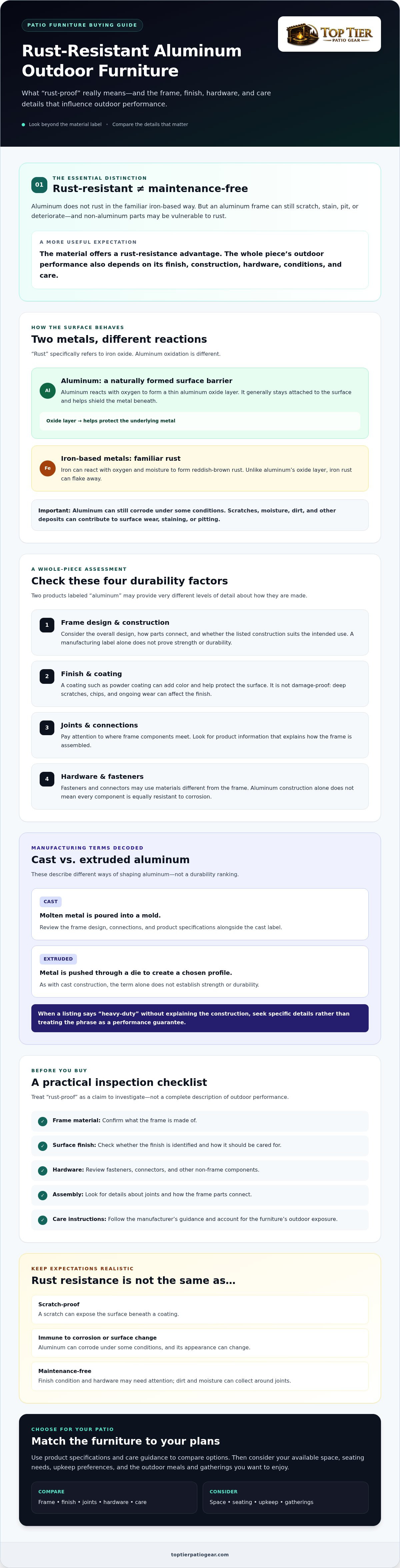
Aluminum does not rust in the familiar way iron or steel does, because rust specifically refers to iron oxide. But that doesn’t make an outdoor frame immune to wear. Its surface can scratch, stain, pit, or deteriorate, and non-aluminum parts may be vulnerable to rust. The phrase “rust-proof” describes an advantage of the material, not a promise that a piece will remain pristine in every outdoor condition.
Exposed aluminum naturally reacts with oxygen to form a thin layer of aluminum oxide. This layer, created through a passivation process, helps protect the metal beneath it from further corrosion. In simple terms, the surface develops a barrier. That protection is useful, but finishes, construction, hardware, and surrounding conditions all influence how furniture looks and performs over time.
Rust-resistant aluminum furniture has an aluminum frame that resists iron-based rust, but may still show surface wear or corrosion and needs care suited to its finish and components.
Does aluminum rust or corrode outdoors?
Iron-based metals can form reddish-brown rust when iron reacts with oxygen and moisture. Aluminum oxidation is different: its oxide layer generally stays attached to the surface rather than flaking away like iron rust, helping shield the underlying metal. This natural protection is one reason aluminum is a popular patio material.
Still, aluminum can corrode under some conditions, and its appearance can change. Scratches may expose the surface beneath a coating; moisture, dirt, or other deposits can contribute to staining or pitting. A finish can help protect and preserve the look of the frame, but its condition matters. Consider how the furniture will be exposed and follow its care guidance instead of assuming the metal alone determines durability.
What does “rust-proof” mean on a furniture listing?
Treat “rust-proof” as a claim to investigate, not a complete description of outdoor performance. For rust-proof aluminum outdoor furniture, look beyond the headline and check what the listing says about frame material, surface finish, hardware, and care instructions. Aluminum rails paired with fasteners made from another material, for example, don’t make every component equally resistant to corrosion.
Rust resistance doesn’t mean scratch-proof or maintenance-free. Coatings can be marked or worn, and hardware may need attention. Clear specifications give you a more useful basis for comparing pieces and setting realistic expectations for upkeep.
How Aluminum Furniture Construction and Finishes Affect Durability
Aluminum is only the starting point. The frame’s shape and assembly, the finish applied to its surface, and the materials used for fasteners all influence how a piece holds up outdoors. Two listings can both say “aluminum” yet provide very different levels of detail about how the furniture is made. Compare those details, not just the headline material claim.
Cast aluminum versus extruded aluminum frames
Cast aluminum is formed by pouring molten metal into a mold, while extruded aluminum is shaped by pushing metal through a die to create a chosen profile. These terms describe different manufacturing approaches, and either may appear in outdoor furniture listings. Neither label alone proves that a frame is stronger or more durable. Look for clear product specifications and consider the frame’s overall design, how its parts connect, and whether the listed construction suits the intended use.
Construction details matter at the points where components meet. Pay attention to joints and connections, and look for information that explains how the frame is assembled. If a listing simply says “heavy-duty” without explaining the construction, seek specific details from the manufacturer rather than treating the phrase as a performance guarantee.
How coatings, joints, and hardware matter
Many aluminum frames use a coating, such as powder coating, to add color and help protect the surface. It can contribute to a consistent appearance, but it isn’t damage-proof. A deep scratch or chipped area can expose the surface beneath, and ongoing wear may affect how the frame looks. For further background on how aluminum resists corrosion, the Association for Materials Protection and Performance explains the behavior of aluminum and its protective oxide layer.
Check whether the listing identifies the finish and gives care guidance. Also review fasteners, connectors, and other hardware. These may use materials different from the frame, so aluminum construction alone doesn’t tell you how every component will respond outdoors. Manufacturer specifications are the place to verify product-specific claims about coatings, hardware, and expected care.
Outdoor durability depends on frame design, assembly, finish, hardware, and care, not aluminum alone.
Use those criteria to assess the Nautica 7-piece aluminum dining set alongside its product details. Confirm its construction and finish rather than assuming specifications that aren’t listed.
How to Compare Aluminum Outdoor Furniture with Other Patio Materials
Choose by how the furniture will be used, moved, and cared for, not by material name alone. Aluminum, steel, and woven designs can all suit an outdoor setting, but their weight, exposed surfaces, and maintenance needs differ. Product construction and care instructions matter within every category.
| Material | Weight and portability | Upkeep and finish considerations |
|---|---|---|
| Aluminum | Often lighter and easier to reposition than steel, though frame design affects the overall weight. | Check the frame finish for care guidance and inspect other components, including fasteners, for their materials and protective finishes. |
| Steel | Often heavier, which may suit furniture intended to stay in place, but weight alone doesn’t indicate outdoor durability. | Ask what protective coating the frame has and how to care for it. Check hardware too, and follow the manufacturer’s directions for preventing or addressing finish wear. |
| Woven furniture | Weight depends largely on the frame beneath the woven surface. Check whether that frame is aluminum, steel, or another material. | Consider how easily the woven surface can be cleaned, whether dirt may collect in its weave, and what care the frame and surface each require. |
Aluminum versus steel for outdoor furniture
Aluminum doesn’t form iron-based rust, while steel’s resistance depends in part on its protective finish and the condition of that finish. Steel pieces may feel more substantial and can be less convenient to move, but heavier construction doesn’t prove greater resistance to weather. For either material, look for the stated frame composition, coating details, hardware materials, and maintenance instructions. Don’t assume every steel product has the same protection or that every aluminum component is finished alike.
Aluminum versus woven outdoor furniture
“Woven” describes a furniture surface, not necessarily the frame. A woven chair may have an aluminum or steel structure, so assess those parts separately. The weave brings texture and a softer visual effect; a clean-lined aluminum frame offers a more defined, streamlined look. Think about where the piece will sit, how exposed it will be, and whether you’re comfortable cleaning between strands as well as caring for the frame.
Rust-proof aluminum outdoor furniture can be a considered choice for shoppers who prioritize resistance to iron-based rust and manageable upkeep, provided the finish and other components suit their setting. Finish claims deserve a closer look: the Fenestration and Glazing Industry Alliance outlines performance standards for aluminum finishes. These references concern aluminum extrusions and panels, so check whether a furniture maker identifies a relevant standard or test for its product rather than assuming it applies.
For a dining area that needs to be rearranged often, lighter furniture may be practical. For a sheltered spot where texture is central to the design, a woven surface may better match the atmosphere you want. Compare the specific construction and care requirements before deciding. No one material is best for every patio.
How to Inspect and Care for Rust-Resistant Aluminum Furniture
A careful review before purchase can reveal more than a product photo or a “rust-resistant” label. Use this four-step checklist to assess what’s specified, what needs clarification, and what care the furniture may require. Outdoor exposure and frequency of use vary, so no material label alone can guarantee a particular lifespan.
- Inspect the specifications. Look for an explicit description of the frame material and construction. Product photography may show the design, but it can’t confirm what the frame or other components are made of. If important details are missing, consult the manufacturer’s current product information.
- Review the finish. Check whether the finish is identified and whether care or performance details are provided. A finish is part of the furniture’s protection and appearance, so learn what the manufacturer says about cleaning and surface damage rather than assuming all coatings respond the same way.
- Examine joints and hardware. Find details about fasteners and connections, along with assembly guidance. Ask what materials are used for hardware if the listing doesn’t say. Check the current warranty terms too, including its coverage and exclusions, directly in the manufacturer’s product information.
- Read the care instructions. Confirm which cleaning methods the manufacturer recommends and whether there are specific instructions for the frame, finish, or other materials. Don’t assume a cleaner or maintenance routine that works for one piece is suitable for another.
Simple care habits that help protect the finish
Follow the manufacturer’s cleaning guidance; avoid guessing at chemicals, tools, or storage methods. During routine cleaning, look for scratches, chipped areas, loose hardware, and dirt that has collected around joints. If you notice visible finish damage, consult the care instructions promptly. Addressing it early may help preserve the furniture’s appearance, but the appropriate response depends on the specific finish.
Conditions matter. A covered patio, an exposed outdoor area, and a frequently used dining space place different demands on furniture. Rather than relying on a promised lifespan, consider the product’s specifications and how its expected care fits your setting.
For example, before choosing the Nautica 7-piece aluminum dining set, review its current product details for frame construction, finish, hardware, care guidance, and warranty terms. Don’t infer specifications that aren’t stated.
Use the same checks when comparing rust-proof aluminum outdoor furniture across listings. Once you understand what’s documented and what upkeep is expected, you can make a more informed choice. Explore the aluminum dining set and review its available specifications as you plan your outdoor dining space.
Choose Aluminum Outdoor Dining Furniture for a More Considered Patio
A well-chosen dining set gives outdoor meals a natural gathering place. Before deciding, bring the details together: verify the frame construction, finish, hardware, and care instructions, then consider whether the set fits your space and the way you entertain. Aluminum can be appealing if you value rust resistance, but the right choice should also feel comfortable and look at home on your patio.
Match an aluminum dining set to your outdoor space
Start with a tape measure. Note the table’s footprint and leave room to pull chairs back, sit down, and move around the table without crowding pathways. Consider how the area works when people are seated, not just how the furniture fits when every chair is tucked in.
Next, match the table shape and seating capacity to your usual gatherings. A rectangular table may suit a longer dining area, while the best size depends on the number of people you typically host and the room available. Think about the atmosphere, too: a dedicated dining zone can anchor shared meals, while a nearby lounge area invites guests to settle in after dinner. If your patio includes a fire table, plan the dining and lounge seating so each area feels connected without blocking movement.
Before selecting rust-proof aluminum outdoor furniture, compare the current product details rather than relying on appearance alone. A polished image can help you picture the style, but it doesn’t confirm the frame, finish, fasteners, or maintenance requirements. Look for those specifications and consider whether the stated care fits the conditions where you’ll place the set.
Explore aluminum dining furniture from Top Tier Patio Gear
Top Tier Patio Gear offers the Nautica 7-piece rectangular outdoor patio aluminum dining table and chair set by Midway as an option to consider for outdoor meals and gatherings. Its confirmed listing identifies it as an aluminum dining set, but check the current product information for details about frame construction, finish, hardware, care, and warranty. Don’t assume specifications that aren’t stated.
Use the same checklist for any seating you plan to pair with the dining area. Dining chairs and fire pit chairs serve different moments, so consider how guests will move between meals and relaxed conversation. Leave a comfortable route between zones, and choose arrangements that suit the available space rather than filling every corner.
With measurements, seating needs, and care expectations in view, you can choose aluminum dining furniture that supports the way you want to use your patio. The result is more than a material choice: it’s a welcoming setting for everyday meals and evenings shared outdoors.
Choose with Confidence, Then Make Room to Gather
Aluminum resists iron-based rust, but lasting outdoor performance depends on more than the frame material. Before choosing, compare construction, finish, and hardware, then check care instructions and make sure the set fits your space, seating needs, and typical gatherings.
The phrase rust-proof aluminum outdoor furniture is a useful starting point, not a promise of immunity from scratches, finish wear, or upkeep. Look for clear specifications and realistic care guidance so your choice suits both your patio and the attention you’re prepared to give it.
Top Tier Patio Gear’s catalog includes the Nautica 7-piece rectangular outdoor patio aluminum dining table and chair set by Midway. Review its current product details alongside the criteria in this guide, without assuming specifications that aren’t listed.
Explore aluminum outdoor dining furniture and picture the meals, conversations, and relaxed evenings your patio can hold. A thoughtful choice can make every gathering feel a little more welcoming.
Frequently Asked Questions
Is aluminum outdoor furniture really rust-proof?
Aluminum doesn’t form the reddish-brown, iron-based rust that affects steel, so “rust-proof” is often used to describe this advantage. However, rust-proof aluminum outdoor furniture isn’t immune to every kind of damage. Finishes can scratch or wear, and dirt or moisture can contribute to surface staining or pitting. Fasteners and other components may also be made from different materials. Check the product specifications and care instructions, not the label alone.
Can aluminum patio furniture corrode or oxidize?
Yes. Aluminum naturally forms a thin aluminum oxide layer when it meets oxygen. This surface layer helps protect the metal underneath, but aluminum can still corrode or show wear in some conditions. A damaged finish, exposure, and care all affect how the furniture looks over time. Oxidation isn’t the same as iron-based rust, but discoloration, staining, or pitting may still occur. Follow the manufacturer’s guidance if you notice a change.
How long does aluminum outdoor furniture last?
There’s no single lifespan that applies to every aluminum patio set. Construction, finish, exposure, use, and care all influence how long it performs and retains its appearance. Furniture Standards estimates extruded aluminum frames may last 15-25 years in a residential full-outdoor setting, but that figure isn’t a guarantee for an individual product. Treat estimates as context, then review the manufacturer’s specifications, warranty, and care instructions for the piece you’re considering.
Does powder-coated aluminum furniture rust?
Powder coating itself doesn’t rust, and an aluminum frame doesn’t develop iron-based rust. However, a coating can become scratched, chipped, or worn, affecting the finish and exposing the surface beneath. Hardware may also be made from another material that has different corrosion risks. Ask what the frame and fasteners are made of, and follow the manufacturer’s instructions for cleaning and addressing finish damage.
Is cast aluminum or extruded aluminum better for outdoor furniture?
Neither construction method is automatically better. Cast aluminum is formed in a mold, while extruded aluminum is shaped through a die. Both terms describe how frame components are made, not a complete measure of quality or outdoor performance. Compare the frame design, joints, finish, hardware, and product specifications. If a listing gives only the construction label without useful details, consult the manufacturer’s current information before deciding.
How do you clean and maintain aluminum patio furniture?
Follow the manufacturer’s cleaning instructions because finishes and other materials can have different care needs. During routine cleaning, check for scratches, chipped coating, loose hardware, and dirt around joints. Don’t assume a particular chemical, abrasive tool, or storage method is suitable unless the care guidance recommends it. If you notice visible finish damage, check the product instructions for the appropriate next step. Regular inspection helps you spot issues early.
Is aluminum outdoor furniture better than steel?
It depends on your priorities and the specific furniture. Aluminum resists iron-based rust and is often lighter to reposition; steel may feel heavier and more substantial. But weight alone doesn’t establish weather resistance, and steel products vary in their protective coatings. Compare frame and hardware materials, finish details, care instructions, and how easily you’ll need to move each piece. The better choice is the one suited to your space and upkeep preferences.